
When you’re missing a tooth, everything feels off. Eating feels strange. Speaking feels strange. Even smiling.
And you’re not alone. Statistics from the American College of Prosthodontists show that nearly 178 million Americans are missing at least one tooth. That’s a lot of mouths missing something.
The good news is there are solutions. Whether you’re looking into dental bridges vs dentures vs dental implants… there are options for getting that smile back. But how do you know which option is right for you?
Here’s a quick breakdown of your tooth replacement options.
You’ll learn:
- Why Replacing Teeth Is Important
- Dental Bridges
- Dentures
- Dental Implants
- How To Choose What’s Best For You
Why Replacing Teeth Is Important
Okay, before getting into replacement options.
You should know that a gap in your smile isn’t something you want to leave unfixed for long.
When you’re missing teeth, they start to shift. Other teeth move into the empty space. Your jawbone begins to lose density. And chewing gets tougher.
When it comes to getting your smile rebuilt, whether you’re exploring budget tooth replacement solutions or paying a dentist to do everything… finding a method that looks good and feels permanent is important.
That means understanding the options.
So let’s do that!
Remember: Every tooth replacement method comes with pros and cons. Your budget, your oral health needs, and your goals all factor into which solution is best for you.
Replacing missing teeth with bridges, dentures, or implants each have their strengths. Let’s talk about them.
Dental Bridges: Going The Old Fashioned Route
A dental bridge literally bridges the gap between teeth. They connect to the teeth on either side of the gap with a false tooth in between.
Here’s the process: Two crowns are made to fit over the teeth on either side of the gap. Then a false tooth is created to fill the gap in the middle.
These dentures are made from porcelain or resin to match your other teeth.
Bridges have been around for ages, and they’re reliable. With good care, they can last between 5 and 15 years. They’re natural looking and feel secure.
However…
In order to attach the bridge to the neighboring teeth… your dentist must file down those teeth. That healthy tooth structure is gone forever. And if there are problems with a tooth down the road… you may need to replace the entire bridge.
Dental bridges are a great option if you want something fixed (non-removable) that costs less than implants.
Ideal if: You’re missing one or two teeth in a row. You have healthy teeth surrounding the gap that can be filed down.
Dentures: The Cheapest Option
Dentures are the most inexpensive way to go. They’re false teeth that sit on your gums, either in full upper/lower sets or just to cover missing teeth in a specific spot.
There are two types of dentures.
- Full dentures cover all of the teeth in either your upper or lower jaw.
- Partial dentures cover a few missing teeth while clipping onto the real teeth surrounding the gap.
Dentures aren’t what they used to be. You can get a very natural look these days with modern materials and dentists who know what they’re doing.
That being said…
Dentures aren’t perfect. Food gets caught underneath while eating. You have to use adhesive to keep them in place. And they don’t provide any stimulation for the jawbone, which leads to further loss over time.
You’ll also need to replace dentures every few years as your jaw changes shape. That’s a cost you should be prepared for.
Dentures are a good solution if money is your main concern. They’ll fill in the gap and let you chew and smile with confidence.
Ideal if: You’re missing most or all of your teeth. Dentures can restore full arches or be customised to focus on specific areas.
Dental Implants: The Permanent Solution
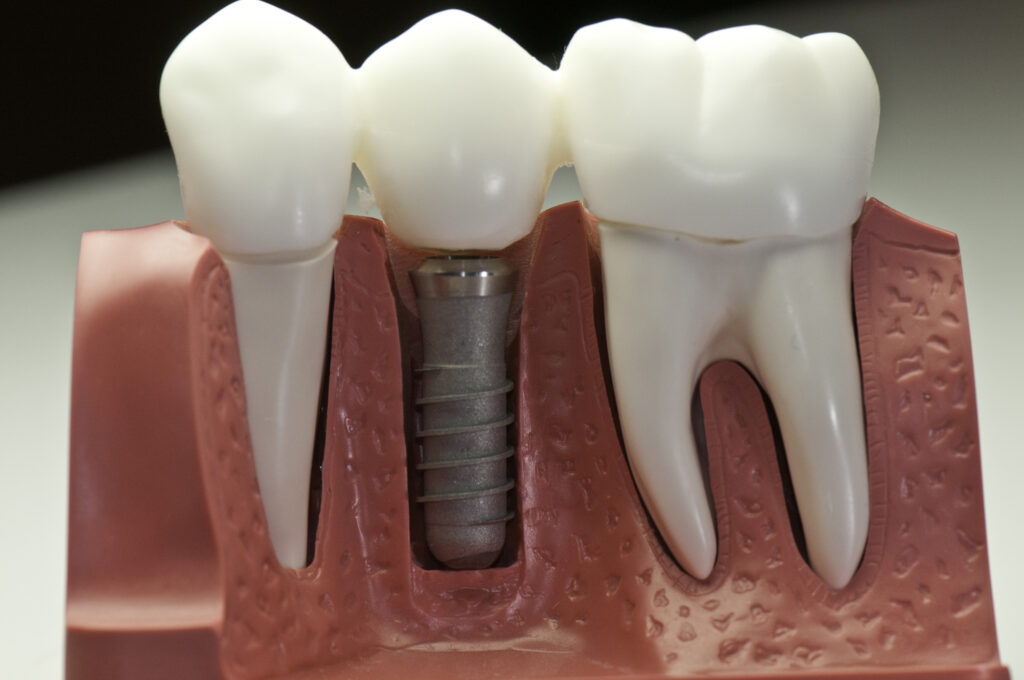
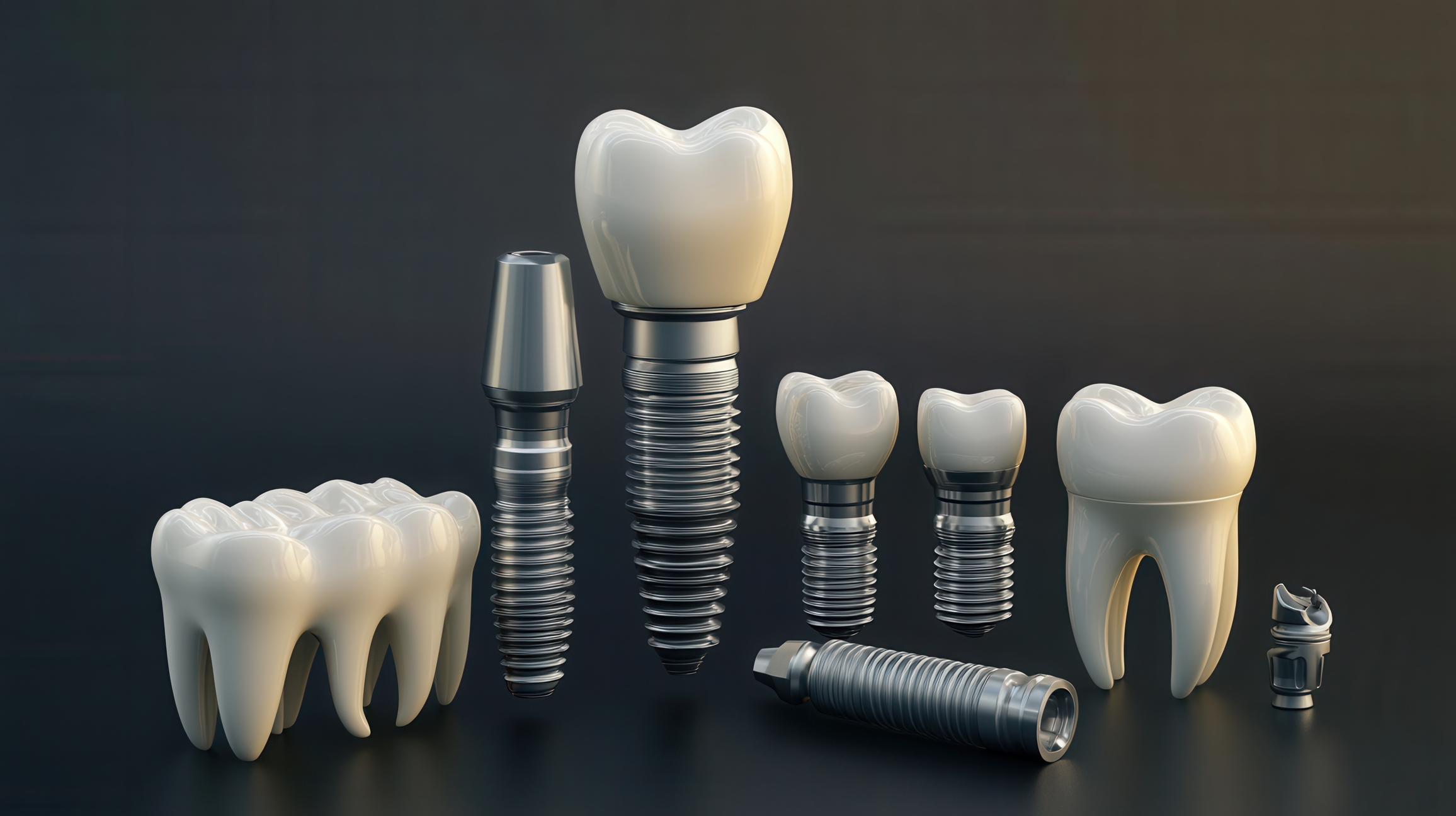
Dental implants are by far the closest thing to real teeth. They anchor directly into the jawbone with a titanium post and hold up a single tooth above it.
Here’s what happens: A titanium screw is inserted into the jaw. After about 2 months, the bone has fused to the implant in a process known as osseointegration. From there a restoration is attached to the post to finish the tooth.
Having healthy teeth is something a lot of people take for granted. The World Health Organisation estimates that nearly 3.5 billion people suffer from oral health issues. Whether it’s decayed teeth, damaged teeth, or tooth loss… dental implants are the gold standard for permanent tooth replacement.
Success rates are high too. Modern implants have a 95-98% success rate.
Don’t let that number fool you either. Dental implants:
- Feel natural.
- Stop jawbone loss in its tracks.
- Don’t damage your other teeth.
- Can last 25+ years with proper care.
Think of them as just another tooth.
Of course, the con with implants is they’re pricey. One implant can cost anywhere from $1,500 to $6,000. More if you need a lot of work done.
But…
Since they’re permanent, you won’t have to spend money on replacement dentistry down the road. Making implants the most cost-effective option over a lifetime.
Ideal if: You want a long-term solution that won’t need replaced and your jaw is healthy. Implants are popular for a reason. When you can get them, they’re great!
Which Tooth Replacement Method Should You Use?
Picking the right tooth replacement option really comes down to these things:
Budget. Dentures are cheap. Bridges fall somewhere in the middle. Implants cost the most money upfront but are also long lasting.
Oral Health. Implants require healthy jawbones to attach to. Bridges need healthy teeth on either side of the gap. Dentures can be used when you’re missing most teeth.
Goals. If you’re only replacing one tooth, you may not want to go through the extensive bridge or implant process. Go with dentures. Want something that lasts the rest of your life? Implants beat bridges every time.
As long as you go to a qualified dentist, they should be able to look at your mouth and recommend the best route to take.
Wrapping It Up
At the end of the day, you’re missing a tooth. Leave it alone and you’ll cause yourself more issues in the long run. Your jaw changes shape, nearby teeth shift, and your bite is off.
Either option can replace missing teeth and restore your smile. There’s just some things you should know before you commit.
- Dental bridges are ideal to replace a couple teeth in a row. The teeth on either side need to be strong, but the process is relatively simple.
- Dentures are a great way to replace many teeth at once. They’re affordable and easy to fix if you’re missing a lot of teeth.
- Dental implants are the best tooth replacement on the market. If you qualify, they can last the rest of your life and act just like real teeth.
Talk with your dentist about your options. They’ll help walk you through costs and what it takes to build your dream smile using dental bridges, dentures, or implants.
The longer you wait to act, the worse conditions become. Jawbone loss and shifting teeth only make it harder (and more expensive) to fix down the road.
Disclaimer
The information presented in “Comparing Tooth Replacement Methods: Bridges, Dentures, and Implants Explained” is intended for general educational and informational purposes only. It does not constitute professional dental, medical, or healthcare advice, diagnosis, or treatment.
Open MedScience does not provide clinical services, and the content in this article should not be used as a substitute for consultation with a qualified dentist, prosthodontist, oral surgeon, or other regulated healthcare professional. Individual circumstances vary, and decisions regarding tooth replacement options—including dental bridges, dentures, or dental implants—must be made following a thorough clinical examination and personalised assessment by a licensed practitioner.
Any statistics, cost estimates, success rates, or procedural descriptions provided are for general reference only and may vary depending on geographical location, clinical complexity, practitioner expertise, and patient-specific factors. No guarantees are made regarding outcomes, longevity, suitability, or effectiveness of any treatment mentioned.
Readers should seek professional advice before making any healthcare decisions. Open MedScience accepts no responsibility or liability for any loss, damage, or adverse outcome resulting from reliance on the information contained in this article.
If you are experiencing dental pain, infection, or urgent oral health concerns, seek immediate care from a qualified dental professional.
home » blog » dentistry »