

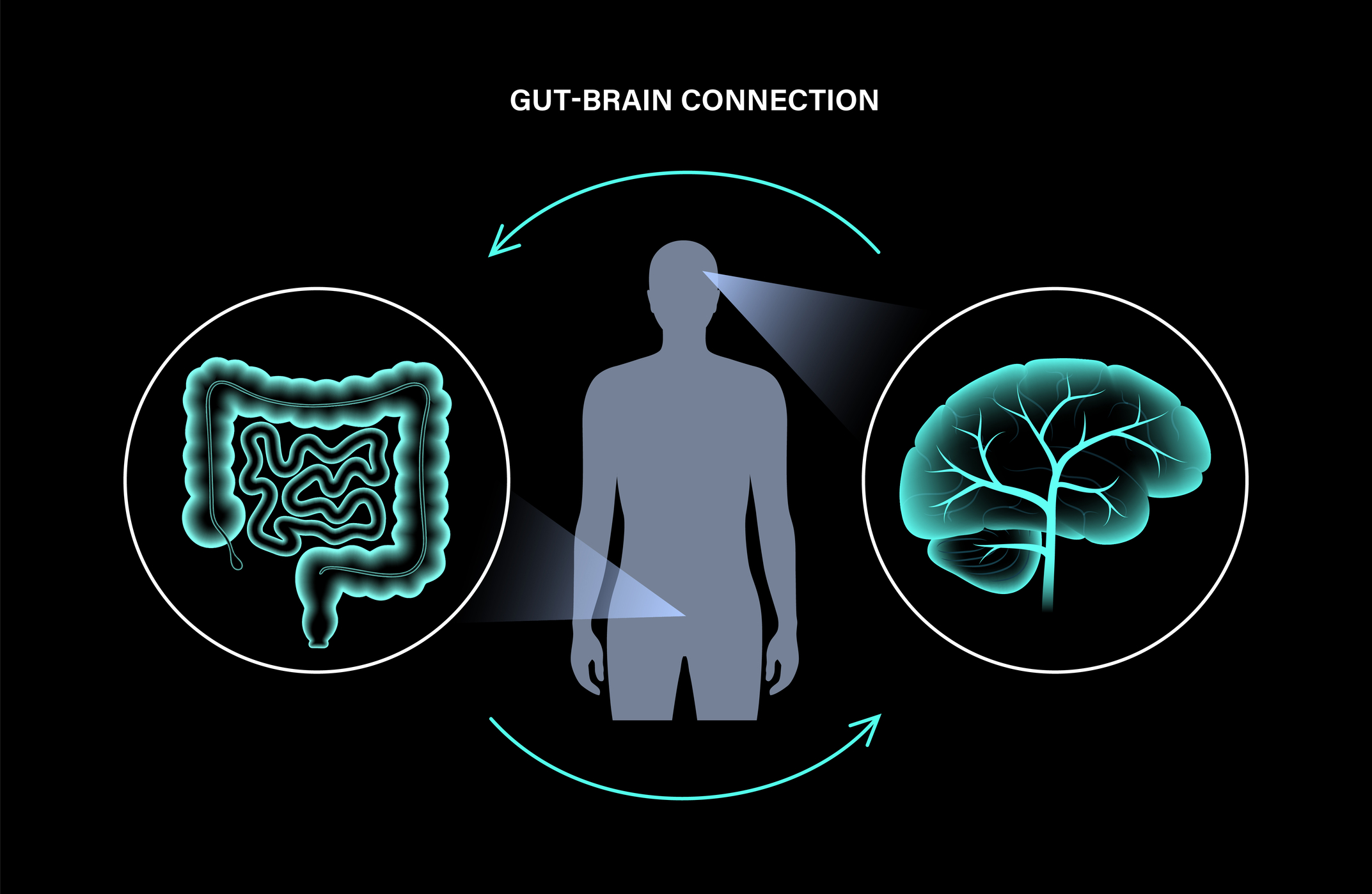
Whether the topics of nutrition or mental health interest you, chances are, you’ve heard of the gut-brain connection—the two-way communication channel between the brain and the digestive system. If you’ve ever felt butterflies in your stomach when you’ve been nervous, or experienced tummy issues when you’ve been stressed, this is the gut-brain connection at work. You may also have noticed that specific foods can influence your mood. Many people enjoy having a chocolate snack when they’re feeling down, for instance, and the reason for that is that the gut produces dopamine, a feel-good neurotransmitter that gives you a small lift. Similarly, if your gut bacteria are imbalanced, it can impact your mood, causing you to feel stressed or anxious, or contributing to mood disorders such as depression. The gut-brain connection also plays a role in satiety—the sensation of feeling full. As such, it is possible to tap into its power to lose or maintain weight.
How the Brain and Gut Communicate
The gut-brain axis is a bidirectional communication system comprising the central nervous system (including the hypothalamus and the brainstem), the enteric nervous system (referred to by some as the gut’s “second brain,” hormones released by digestive organs, neural signals transmitted through the vagus nerve, and the gut microbiome—a miniature biome populated by trillions of microscopic organisms, including over a thousand species of bacteria, as well as viruses, fungi, and parasites. These bacteria play a key role in human health, helping to break down complex carbohydrates and dietary fibres that the body cannot break down on its own. Gut bacterial also produce short-chain fatty acids and the enzymes needed to synthesise vitamins B1, B9, B12, and K. The gut’s role in the feeling of fullness is also vital. It produces key hunger hormones, mainly ghrelin, to stimulate appetite, but also produces PYY and GLP-1, which are released after a meal to “inform” the brain that we are full. As such, the gut helps regulate food intake and energy balance.
Modern Treatments that Mimic the Gut’s Helpful Work
Recent diabetes and weight loss approaches, such as GLP-1 agonists, work similarly in the gut. They essentially amplify the body’s satiety signals by mimicking the key hormones involved in appetite and metabolism. They affect the gut-brain axis in powerful ways. For instance, they cause food to remain in the stomach longer, amplify hormonal signals that tell the brain the body has consumed sufficient food, and send signals to the appetite-regulating centres in the hypothalamus. The signals stimulate satiety neurons and suppress pathways that promote hunger. As such, they help reduce the need to eat and quell food cravings.
Stretch Receptors and Physical Fullness
The gut’s role in promoting the sensation of fullness is by no means limited to hormone production. It also plays a mechanical role—specifically, the stomach has stretch receptors that activate when food enters the stomach. These receptors send signals to the brainstem via the vagus nerve—the main nerve of the parasympathetic system, which controls a wide array of body functions, including digestion, heart rate, and the immune system. This nerve is the main communication highway between the brain and the gut, and its functioning can be impaired by stress, obesity, and diets high in unhealthy fat.
Tapping into the Gut-Brain Connection
To tap into the benefits of the gut-brain connection, it can help to consume a Mediterranean-style diet, comprising lean proteins, fruits and vegetables, legumes, seeds, and nuts, and to steer clear of refined foods. Specific foods—including Omega-3-rich fish such as salmon and trout, polyphenol-rich foods such as berries, olive oil, and green tea, and fermented foods such as yoghurt, kimchi, kombucha, and sauerkraut— can all help boost gut microbiome health. Diet isn’t everything, however. Regular physical activity (at least 150 minutes a week), stress management, and regular sleep all play a role in maintaining good gut health.
The gut-brain connection affects many key areas of health, including the sense of fullness. This connection results from multiple hormonal, neural, and microbial signals working together. Maintaining a healthy microbiome can offer many benefits beyond simply aiding appetite control. It also has numerous benefits for everything from mood to immunity. It can be leveraged through a sound diet, daily exercise, good sleep, and effective stress prevention.
Disclaimer
The information presented in this article is for general educational and informational purposes only and is not intended as medical advice. It should not be used as a substitute for professional medical guidance, diagnosis, or treatment. Always seek the advice of a qualified healthcare professional regarding any medical condition, dietary changes, or treatment options, including the use of medications such as GLP-1 agonists. Open MedScience does not accept responsibility for any actions taken based on the content of this article.