
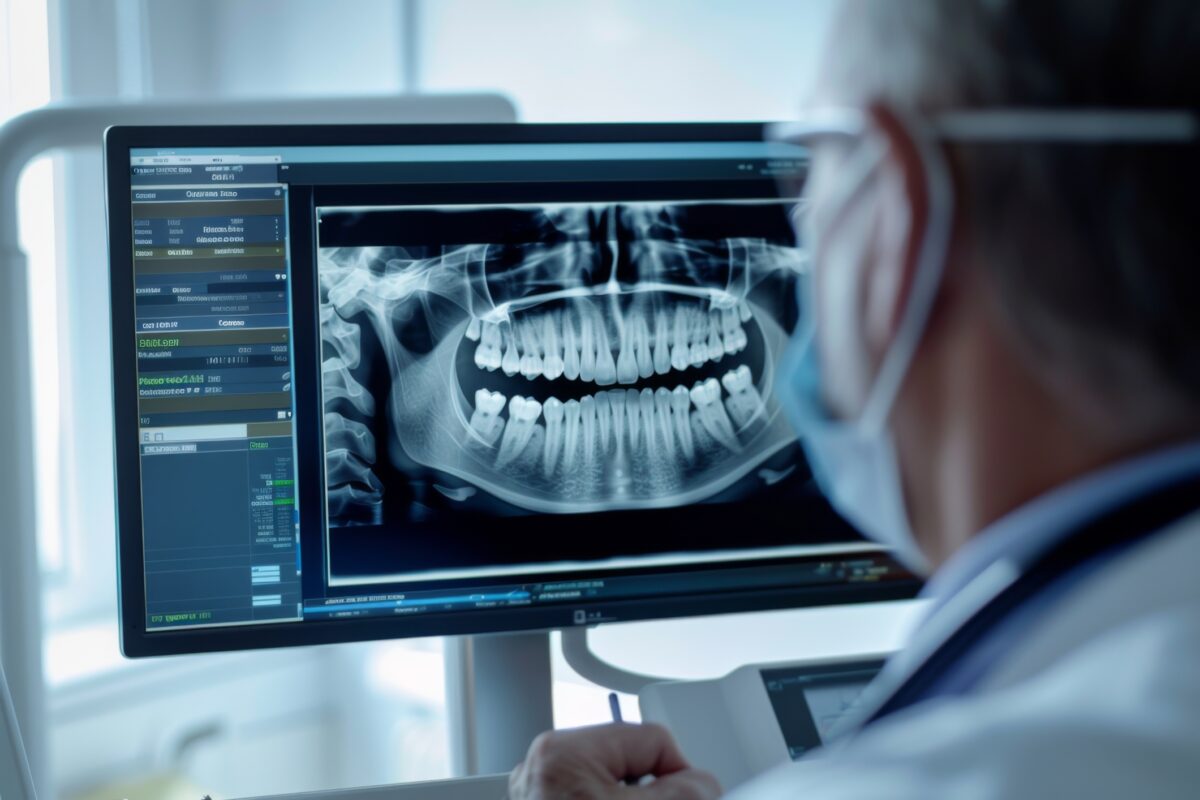
Despite major advances in oral healthcare, nearly one in five adults still lives with untreated cavities. This is not simply a matter of neglect. Many cases go undetected because early-stage decay often develops without pain or visible symptoms. By the time discomfort appears, the damage may already require more invasive treatment.
This gap between disease onset and diagnosis highlights a fundamental issue in traditional care models. Conventionally, dentistry has been reactive rather than proactive. However, the integration of dental imaging technology and AI in dentistry is rapidly changing how clinicians detect, monitor, and manage oral health conditions.
Why Early Detection Has Been a Challenge
Conventional methods such as visual examinations and standard radiographs remain essential, but they have limitations. Early enamel demineralization can be subtle and easily missed, especially in areas between teeth or beneath existing restorations. Even experienced clinicians may interpret imaging differently, which can lead to variations in diagnosis.
This is where AI dental imaging enhances clinical decision-making. By analyzing patterns within digital scans, AI systems can identify early signs of decay that may not be immediately obvious. When paired with modern dental imaging technology, these tools provide a more consistent and data-driven approach to diagnosis.
The Role of AI Imaging in Modern Dentistry
The integration of AI in dentistry is not about replacing clinicians. Instead, it supports them with additional layers of insight. AI-powered systems evaluate radiographs, flag suspicious areas, and quantify changes over time. This leads to earlier detection and more accurate treatment planning.
For patients, this translates into clearer communication. Visual overlays generated through AI dental imaging allow dentists to show exactly where decay is developing. This transparency builds trust and improves treatment acceptance.
From a clinical perspective, these advancements contribute to precision dentistry, where decisions are guided by detailed data rather than estimation alone. When combined with advanced dental imaging technology, practitioners can detect issues earlier, when intervention is minimal, and outcomes are significantly better.
As imaging tools become more precise, many practices are combining advanced diagnostics with preventive dental care for families to identify issues earlier and build healthier habits across every stage of life.
Preventive Diagnostics: Shifting the Focus to Long-Term Health
The emergence of preventive dental care marks a significant shift in how oral health is managed. Instead of waiting for symptoms to appear, clinicians now focus on identifying risk factors and early changes before they progress.
Routine use of dental imaging technology enables dentists to monitor small changes in tooth structure over time. When combined with AI in dentistry, these tools can help assess the risk of cavity progression and support more targeted preventive strategies.
This proactive approach aligns closely with family dentistry, where care is designed to support patients across all age groups. Early detection not only reduces the need for complex procedures but also lowers long-term healthcare costs.
What This Means for Families and Everyday Patients
For families, the benefits of these advancements are substantial. Children and adults alike can benefit from earlier diagnoses, less invasive treatments, and improved overall outcomes. In comprehensive family dental care, the emphasis is on continuity and prevention rather than episodic treatment.
Parents, in particular, gain peace of mind knowing that modern dental imaging technology can detect issues before they become serious. This is especially important in pediatric care, where early intervention can influence lifelong oral health habits.
The integration of precision dentistry into routine care also enhances the patient experience. Appointments become more informative, as patients can see visual evidence of their oral health status. This fosters better understanding and encourages consistent follow-up care.
The Evolving Role of Technology in Clinical Practice
Dental clinics today are increasingly defined by their use of advanced tools. Modern family dentistry practices are adopting AI dental imaging systems to improve diagnostic accuracy and streamline workflows.
These innovations are particularly valuable in identifying early caries, monitoring existing restorations, and evaluating bone health. By leveraging dental imaging technology, clinicians can create more personalised treatment plans that address each patient’s unique needs.
At the same time, the principles of preventive dental care remain central. Technology enhances these efforts rather than replacing them, ensuring that care remains both effective and patient-centered.
Building Lifelong Oral Health Through Early Intervention
The long-term impact of early detection cannot be overstated. When cavities are identified at an early stage, treatment options are simpler and less invasive. This reduces patient discomfort and preserves more of the natural tooth structure.
Incorporating precision dentistry into routine visits allows clinicians to track changes over time and adjust care plans accordingly. This approach is particularly beneficial in comprehensive family dental care, where patients are monitored consistently over many years.
Advancements in imaging are also influencing younger populations. The integration of modern diagnostics with advances in paediatric dentistry ensures that children receive care tailored to their developmental needs. Early detection in this group can prevent more serious complications later in life.
The Broader Impact of Imaging and AI on Dentistry
The transformation of oral healthcare extends beyond individual practices. At a broader level, medical imaging is reshaping modern dentistry by improving diagnostic standards and promoting consistency across providers.
With the continued evolution of AI in dentistry, clinicians can access tools that enhance both efficiency and accuracy. These systems support better clinical outcomes while also making care more accessible and understandable for patients.
As dental imaging technology continues to advance, its role in preventive care will only expand. The ability to detect, monitor, and predict oral health conditions represents a major step forward in how dentistry is practiced.
A Healthier Future Starts with Earlier Detection
The persistence of untreated cavities highlights the need for a more proactive approach to oral healthcare. By combining AI dental imaging, precision dentistry, and preventive dental care, modern practices are redefining what it means to maintain oral health.
For patients and families, this shift offers a clear advantage. Earlier detection leads to simpler treatments, better outcomes, and greater confidence in care decisions. Within family dentistry, these innovations are helping to build a foundation for lifelong oral health.
As technology continues to evolve, the integration of advanced diagnostics into everyday practice will play a crucial role in reducing the prevalence of untreated cavities and improving overall health outcomes for future generations.
Disclaimer: This article is provided for general informational and educational purposes only and should not be interpreted as professional dental, medical, diagnostic, or treatment advice. AI imaging and preventive diagnostic tools may support clinical decision-making, but they do not replace assessment by a qualified dental professional. Patients should consult a registered dentist or appropriate healthcare provider for advice tailored to their individual oral health needs. Open MedScience does not endorse any specific dental technology, software, clinic, product, or treatment mentioned or implied in this article. In the event of dental pain, swelling, infection, trauma, or any urgent oral health concern, seek prompt professional care.