
Bone regeneration has become a central focus in modern implant dentistry, particularly as clinicians increasingly treat patients with reduced bone volume, long term tooth loss, or complex anatomical limitations.
Advances in biomaterials, growth factors, and guided bone regeneration techniques are expanding treatment options and improving predictability in implant placement. What was once considered a limiting factor in treatment planning is now often a manageable challenge, thanks to ongoing innovation in regenerative approaches.
Historically, limited bone volume often restricted implant placement or required more invasive surgical approaches. In many cases, patients were either not candidates for implants or required extensive procedures that increased cost, recovery time, and overall complexity.
Today, regenerative techniques allow clinicians to rebuild alveolar bone prior to implant placement, creating more favorable anatomical conditions and improving long term stability. This shift has significantly broadened the pool of patients who can benefit from implant-based restorations.
Evolution of Bone Grafting Materials
Bone grafting materials have evolved significantly over the past decade. Autogenous bone, once considered the gold standard due to its osteogenic properties, is now frequently combined with allografts, xenografts, and synthetic biomaterials to optimize outcomes while minimizing patient morbidity.
These materials provide structural scaffolding that supports new bone formation while gradually integrating with native tissue. Each category of graft material offers distinct advantages.
Allografts, derived from human donor bone, eliminate the need for a secondary surgical site while still supporting bone regeneration. Xenografts, typically sourced from bovine bone, are known for their slow resorption rates and ability to maintain volume over time. Synthetic materials, including calcium phosphates and bioactive ceramics, offer high biocompatibility and controlled resorption characteristics.
Modern biomaterials are designed to balance resorption rate with long term volume stability. Slow resorbing grafts help maintain ridge dimensions in esthetically sensitive areas, while faster integrating materials support earlier implant placement in functional zones. The selection often depends on defect size, anatomical location, and desired treatment timeline.
Collagen membranes and barrier systems further enhance guided bone regeneration by stabilizing graft material and preventing soft tissue invasion. These membranes play a critical role in maintaining space for bone growth, allowing osteogenic cells to populate the defect without interference from surrounding soft tissue.
In more advanced cases, reinforced membranes or titanium mesh systems may be used to maintain structural integrity in larger defects, enabling reconstruction of both horizontal and vertical bone deficiencies that previously limited implant placement.
Enhancing Osseointegration
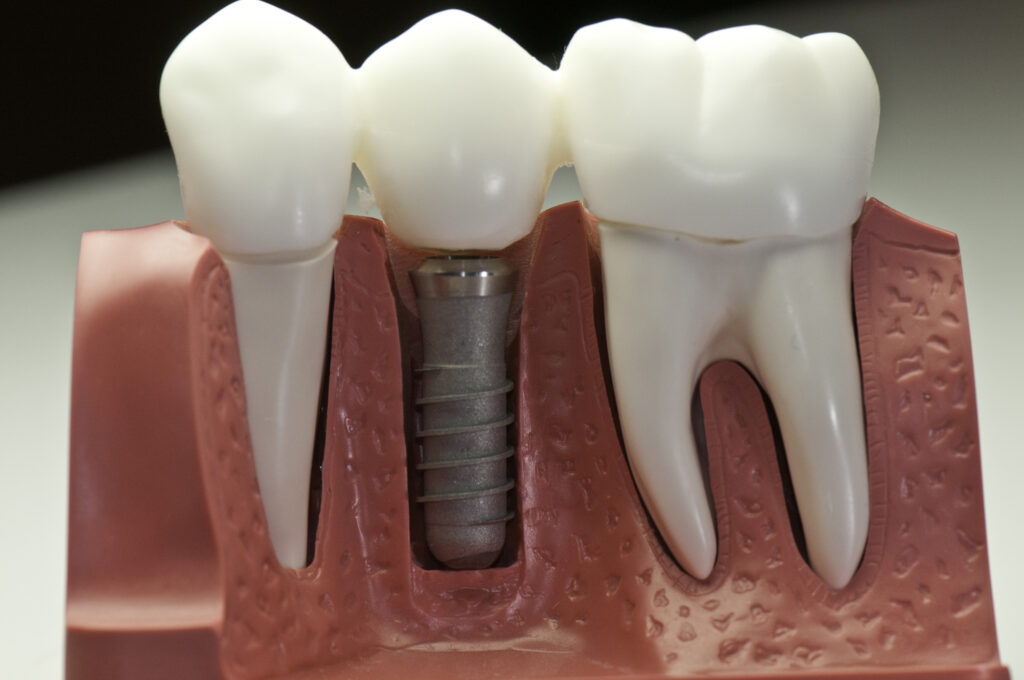
Successful implant treatment depends on osseointegration, the direct structural connection between the implant surface and surrounding bone. Without stable osseointegration, long term implant success is compromised.
Advances in implant surface technology have significantly improved this process by increasing surface roughness and promoting cellular attachment at the microscopic level. These surface modifications enhance the biological response during the early healing phase.
Techniques such as sandblasting and acid etching create micro and nano-scale surface textures that improve bone to implant contact. In addition, bioactive coatings, including calcium phosphate and hydroxyapatite layers, further stimulate bone formation and accelerate integration.
These developments are particularly important in areas of lower bone density, such as the posterior maxilla, where achieving primary stability can be more challenging. Improved surface technology allows for more predictable outcomes even in less ideal conditions.
In addition, biologic adjuncts such as platelet rich fibrin (PRF) and growth factors are increasingly used to support healing. These materials are derived from the patient’s own blood and contain concentrated platelets, cytokines, and growth factors that may enhance vascularization and accelerate tissue regeneration.
The use of these biologic approaches is becoming more common as clinicians aim to optimize healing environments and reduce recovery time for patients undergoing implant procedures.
Treating Patients With Reduced Bone Volume
A significant number of implant candidates present with bone loss due to periodontal disease, trauma, infection, or long term edentulism. In the past, these patients often had limited treatment options.
Today, regenerative techniques allow clinicians to expand treatment eligibility and restore both function and esthetics in cases that were previously considered unsuitable for implants. This has been a major shift in how implant dentistry is approached.
Procedures such as ridge augmentation, sinus elevation, and staged bone grafting are routinely used to create adequate bone volume prior to implant placement. Sinus lift procedures, for example, allow clinicians to increase vertical bone height in the posterior maxilla, enabling implant placement in areas that would otherwise lack sufficient support.
Similarly, horizontal ridge augmentation can rebuild narrow alveolar ridges, allowing for proper implant positioning and improved prosthetic outcomes. These approaches not only make implant placement possible but also improve long term load distribution and stability.
According to clinical research from Cosmetic & Implant Dentistry Center, bone regeneration techniques have significantly expanded the scope of implant dentistry. Patients who previously lacked sufficient bone volume can now be treated predictably using a combination of modern grafting materials and biologic approaches.
Long Term Stability and Treatment Outcomes
Maintaining bone volume after implant placement is critical for long term success. Even after successful osseointegration, ongoing bone remodeling can influence both functional stability and esthetic outcomes.
Biomaterials that support gradual remodeling while preserving ridge dimensions contribute to improved implant survival rates. This is especially important in anterior regions, where even minor bone loss can impact soft tissue contours and overall esthetics.
In addition to material selection, proper surgical technique and prosthetic planning play a key role in long term success. Implant positioning, load distribution, and occlusal design all influence how forces are transferred to surrounding bone over time.
As regenerative technologies continue to advance, clinicians are able to approach complex cases with greater confidence. The combination of improved biomaterials, biologic adjuncts, and refined surgical techniques is helping drive more predictable outcomes across a wider range of patients.
These developments also reflect broader trends in regenerative medicine, where biomaterials and biologic therapies are increasingly used to restore tissue structure and function rather than simply replace it.
Looking ahead, continued research into stem cells, tissue engineering, and next-generation biomaterials is expected to further enhance the capabilities of implant dentistry. As these innovations become more widely adopted, the gap between complex anatomical limitations and successful implant outcomes will continue to narrow.
Disclaimer: This article is for general information only and is not a substitute for professional dental or medical advice, diagnosis, or treatment. Dental implant suitability, bone regeneration, grafting materials, and related procedures depend on individual clinical circumstances and should be assessed by a qualified dental professional.
Open MedScience does not endorse any specific treatment, product, clinic, provider, or biomaterial mentioned. While care has been taken to ensure accuracy at the time of publication, dental research and clinical practice may change. Patients with dental concerns or complications should seek advice from a qualified clinician.