In this industry, clean room manufacturing is nonnegotiable. Knowing you need a partner with this capability is not enough — you must understand what cleanliness classification you need and who offers the best clean room manufacturing for medical devices.
A Clean Room’s Role in Medical Device Manufacturing
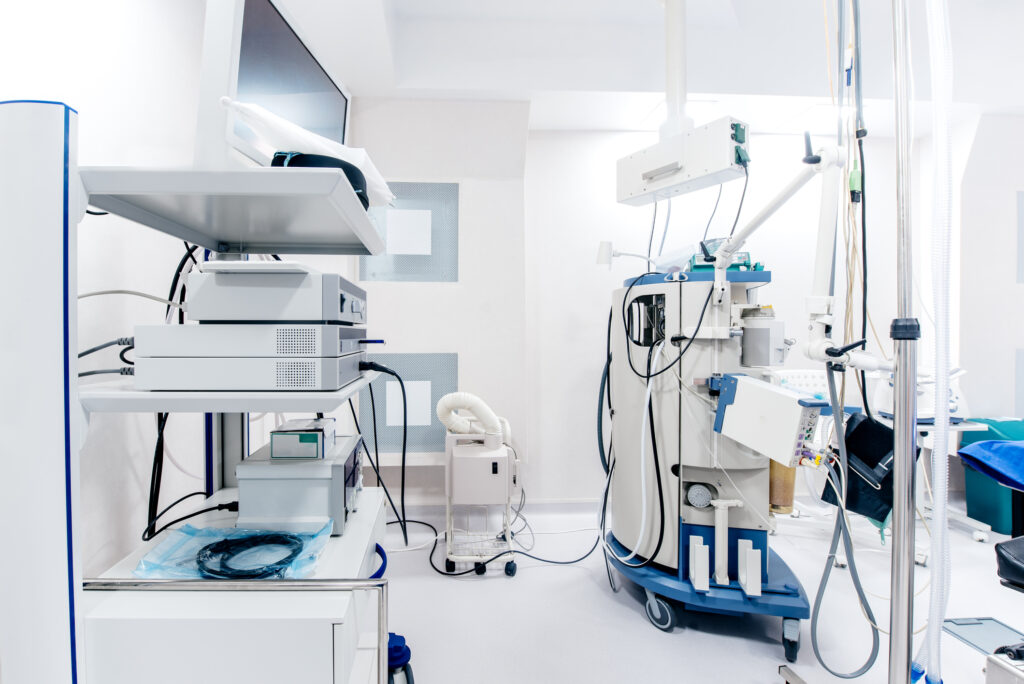
Whether you need medical autoclaves, catheters, microfluidics systems, or endoscopes, keeping your medical devices contamination-free is paramount. A clean room is a controlled environment designed to minimise contaminants during production and assembly.
Ventilation systems and high-efficiency filters can minimise airborne particles. You can decrease particle concentrations by 65% simply by increasing the frequency of air changes per hour from 40 to 120. Sterile spaces must also account for thermal comfort, air distribution, and pressurisation.
What Sets a Clean Room Apart From Other Environments?
In a standard manufacturing facility, products come into contact with numerous equipment operators and production line workers. These individuals may misuse or forgo personal protective equipment. Each component is exposed to microbial and particulate contamination during assembly.
A clean room is built with easy-to-clean materials, uses advanced air filtration systems, and enforces strict personnel protocols to decrease the risk of health-care-associated infections (HAIs). In addition to improving patient outcomes, it helps you comply with ISO, European Union Medical Device Regulation, and United States Food and Drug Administration (FDA) rules.
Assessing Clean Rooms With a Risk-Based Perspective
Controlling the risks associated with microbial and particulate contamination in medical devices is essential. Possible adverse effects include patient infection, device malfunction, and compromised biocompatibility.
Say a single, subvisible microbe or particle of dust falls on a cardiac stent. If you trace its path from production to utilisation, you may find it causes an HAI. The U.S. FDA issues a warning — you face a potential product recall and a loss of market trust. Protecting processes and products from particulate contamination is essential.
Calculating the Benefits of an ISO-Certified Clean Room
Clean room certifications are granted by the International Organisation for Standardisation (ISO), an independent, nongovernmental third party. It determines whether controlled environments meet the ISO 14644-1 standard. It evaluates the concentration of airborne particles ranging from 0.1 to 5 microns to determine air cleanliness classifications.
Class numbers range from one to nine. ISO Class 1 is the pinnacle of controlled environments. Since it is ultra-sterile, it is rare, reserved only for applications where even a single particle can cause catastrophic failure.
Class 7 and 8 rooms are common in the pharmaceutical and medical device sectors, allowing virtually no particles in. Many medical device manufacturers have sterile production spaces with these certifications.
Cleanliness correlates directly to financial benefits because it helps prevent production delays and improve patient safety. An economic evaluation to determine whether environmental cleaning and disinfection of medical equipment is cost-effective compared to usual care found that it decreases costs by over $642,000 per 1,000 patients. It also reduces HAIs significantly.
Why Choose Partners With Clean Room Manufacturing?
Contract partners with clean room manufacturing capabilities have the technical knowledge, domain expertise, responsiveness, and document support needed to ensure conformance to stringent health care regulations.
Whether you are making an ultrasmall component for an implantable medical device or a large machine part for a diagnostic tool, you must adhere to strict federal regulations and quality standards. You want to rely on knowledgeable professionals with decades of experience.
Who Offers Clean Room Manufacturing for Medical Devices?
The following organisations are examples of companies that provide clean room manufacturing services in the medical device sector. Their inclusion is for editorial illustration and does not imply recommendation.
SIMTEC Silicone Parts
SIMTEC provides clean room manufacturing services for medical devices. It specialises in medical-grade liquid silicone rubber (LSR) — a tasteless, odourless, hypoallergenic material — with injection-moulded LSR, LSR overmolded components, and LSR multishot capabilities.
In addition to having ISO Class 8 clean rooms, it has quality and environmentally controlled manufacturing cells with ISO 9001, ISO 13485, and IATF 16949 certifications. Its fully automated technologies enable hands-free clean manufacturing. Its decades of experience and certifications have helped it become a trusted partner to Fortune 100 companies.
Keller Technology Corp
Keller Technology designs, develops, and builds electromechanical instruments, equipment, and turnkey systems. It has precision and custom fabrication capabilities for close-tolerance assemblies and specialised machinery.
Although it is based in the U.S., it operates as a global supplier. Its New York facility is ISO 9001 certified, while its North Carolina plant adheres to ISO 9001 and 13485. Both adhere to clean room assembly standards — meeting or exceeding ISO Class 7 — and are International Traffic in Arms regulations (ITAR) compliant.
Nolato Group
Sweden-based Nolato operates dozens of facilities in North America, Asia, and Europe. Since 1938, it has designed, prototyped, and produced stock and custom polymer products. Its services cover injection moulding, extrusion, sealing, die-cutting, decoration, and assembly.
It has many ISO Class 7 and 8 clean rooms, some of which are fully automated. All staff and materials enter through dedicated airlocks to minimise contamination, and the spaces are monitored around the clock for microbiological and environmental control.
What to Ask When Evaluating Clean Room Manufacturers
Review your options carefully. Can potential partners meet your regulatory requirements? Do they provide off-the-shelf or tailored solutions? Can they supply references or case studies to support their credentials? What is their typical turnaround time?
You should also consider whether automation capabilities are a must-have. Research suggests personnel are responsible for over 80% of all microbiological incidents and cleanliness exceedances. Handling materials and operating equipment can deposit particles.
The staff’s very presence can be dangerous, even if they take great pains to decontaminate before entering. Partnering with a company with fully automated technologies virtually eliminates this risk.
Looking Toward the Next Generation of Medical Devices
Implantables and wearables are becoming popular. As medical device regulations evolve, sterile production environments will become increasingly important. As a forward-thinking individual, you know it is best to partner with companies that provide the best clean room manufacturing services for medical devices sooner rather than later.
Disclaimer
This article is provided for information only and does not constitute professional, technical, regulatory, medical, or legal advice. The organisations and services mentioned are included for illustrative and editorial purposes and should not be interpreted as recommendations, guarantees of performance, or assurances of suitability for any specific project. Clean room classifications, certifications, regulatory obligations, and manufacturing requirements vary across jurisdictions and applications, and readers must conduct their own independent assessment, verification, and due diligence before selecting any supplier or engaging in manufacturing activities.
Readers are solely responsible for confirming the validity, scope, and current status of any supplier certifications, quality standards, regulatory claims, and conformity documentation relevant to their intended use and operational context. Open MedScience makes no representation or warranty, express or implied, regarding the accuracy, completeness, reliability, or timeliness of the information presented and accepts no responsibility for any loss, damage, or consequences arising from reliance on this content. Readers should consult qualified professionals and the appropriate regulatory authorities regarding compliance, safety, and quality matters relating to medical device manufacturing.
You are here: home » diagnostic medical imaging blog »