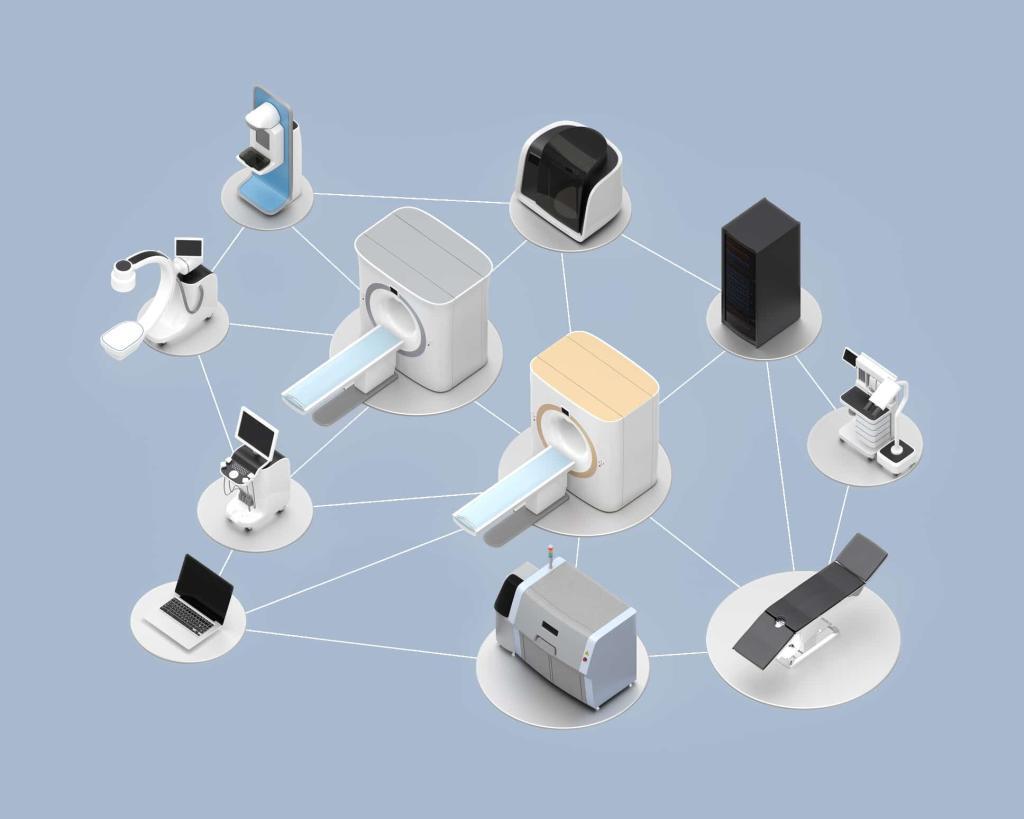


Growing Healthcare Practices Face New Challenges
As healthcare organizations expand across multiple providers, locations, and specialties, their operational complexity increases. Larger practices often face challenges related to scheduling coordination, communication, staffing, administrative workload, regulatory requirements, and managing growing volumes of patient information. In addition, patients increasingly expect convenient digital experiences, including online scheduling, secure messaging, and electronic access to health records.
Electronic health record (EHR) technology has become a foundational tool for addressing many of these challenges. According to the Office of the National Coordinator for Health Information Technology (ONC), approximately 95% of office-based physicians in the United States have adopted EHR technology.
At the same time, healthcare organizations are exploring artificial intelligence (AI) capabilities that can support documentation, workflow automation, analytics, scheduling, coding assistance, and operational decision-making.
What Sets AI EHR Software Apart?
AI-based EHR platforms incorporate technologies such as natural language processing (NLP), machine learning, predictive analytics, and automation tools designed to assist healthcare organizations with administrative and clinical workflows. Examples of EHR with AI functionality include:
- AI-assisted clinical documentation and ambient scribing
- Automated chart organization and data entry support
- Predictive analytics for operational planning and patient risk identification
- Intelligent scheduling tools
- Coding assistance and documentation review
- Clinical decision-support functionality
- Workflow automation and administrative task management
Research indicates that AI adoption is increasing across several healthcare domains, particularly imaging, radiology, and clinical documentation. However, adoption rates vary significantly depending on specialty, organization size, geographic region, and survey methodology. Readers should consult original source material when evaluating reported adoption statistics.
Important: AI-generated clinical recommendations and decision-support outputs are intended to assist healthcare professionals in reviewing available information. These tools should support, not replace, qualified clinical judgment, independent decision-making, or provider responsibility for patient care.
Potential Benefits of AI-Powered EHRs for Multi-Provider Practices
Healthcare organizations may experience benefits from EHR with AI functionality when solutions are appropriately implemented, governed, and monitored. Actual results vary based on workflows, staffing, user adoption, integration of quality, and organizational factors.
1. Supporting Provider Well-Being
Administrative burden remains a significant concern across healthcare.
- The American Medical Association reported that approximately 42% of physicians surveyed in 2024 experienced symptoms of burnout.
- AI-assisted documentation tools may help reduce time spent on repetitive data entry and charting activities.
- Ambient scribing technologies have shown promise in reducing documentation burden and improving clinician satisfaction in some studies. However, outcomes vary by practice setting and implementation approach.
2. Improving Clinical Workflow Efficiency
Many healthcare providers spend substantial time completing documentation and administrative tasks.
Potential efficiency-enhancing capabilities include:
- Automated transcription and note drafting
- Smart templates and data population
- Streamlined documentation workflows
- Administrative task automation
While these tools may improve workflow efficiency, organizations should validate accuracy and maintain appropriate human review processes.
3. Supporting Scalability Across Multiple Locations
As organizations grow, consistency becomes increasingly important.
AI EHR systems may support:
- Standardized documentation workflows
- Shared scheduling and resource management
- Centralized reporting and analytics
- Cross-location coordination
These capabilities can help organizations manage growth more effectively while maintaining operational visibility across sites.
4. Assisting Revenue Cycle Processes
Revenue cycle management remains a major operational challenge for healthcare organizations.
AI-Powered tools may assist by:
- Reviewing documentation for coding consistency
- Identifying potential claim issues before submission
- Verifying patient information and eligibility
- Highlighting documentation gaps
According to a Premier Inc. analysis, healthcare organizations spend an estimated $19 billion annually managing and appealing claim denials. AI-enabled revenue cycle tools may help identify factors associated with denials, but they cannot eliminate denials or guarantee reimbursement outcomes because payer requirements and other factors continue to influence claim decisions.
5. Enhancing Operational Visibility
Many AI-based EHR platforms include analytics and reporting tools that provide insights into:
- Resource utilization
- Documentation workflows
- Financial performance
- Provider productivity
- Scheduling patterns
These tools may help leadership teams identify trends and make more informed operational decisions. However, organizational decisions should not rely solely on AI-generated analyses without appropriate review and validation.
6. Improving Digital Patient Engagement
Patient-facing functionality is increasingly important in healthcare delivery.
Examples include:
- Online appointment scheduling
- Electronic intake forms
- Patient portals
- Secure messaging
- Automated appointment reminders
Research suggests that many patients value online scheduling options when selecting healthcare providers. Automated reminders have been associated with reduced no-show rates in some settings, although results vary between organizations and patient populations.
7. Supporting Compliance and Security Efforts
AI-Driven EHR monitoring and auditing tools may help organizations:
- Track system activity
- Generate audit logs
- Identify unusual access patterns
- Support cybersecurity monitoring
- Assist with risk assessment activities
However, AI technology does not automatically ensure HIPAA compliance or regulatory compliance.
Healthcare organizations remain responsible for implementing and maintaining appropriate administrative, technical, and physical safeguards, performing risk assessments, managing access controls, monitoring vendors, and complying with applicable privacy and security requirements. AI should be viewed as one component of a broader compliance and governance framework.
8. Preparing for Future Growth
Cloud-based EHR platforms often offer infrastructure that supports organizational growth.
Potential capabilities include:
- Multi-location expansion support
- Interoperability through APIs and standards-based integrations
- Ongoing product updates
- Centralized administration
- Expanded reporting and analytics
These capabilities may help organizations adapt to evolving operational requirements and healthcare technology standards.
Potential Limitations and Risks of AI-Powered EHR Technology
Although AI-enabled EHR systems offer potential advantages, healthcare organizations should also consider potential risks and implementation challenges.
AI-Generated Errors
AI systems can generate inaccurate, incomplete, or misleading information. Documentation, coding suggestions, and decision-support outputs require human review and validation before use in patient care or operational activities.
Privacy and Data Protection
Healthcare organizations must evaluate how patient data is collected, processed, stored, and shared within AI-driven systems. Privacy obligations remain applicable regardless of whether AI functionality is used.
Cybersecurity Risks
AI solutions may introduce additional cybersecurity considerations related to third-party integrations, data sharing, model access, and evolving threat vectors. Appropriate security controls and ongoing monitoring are essential.
Algorithmic Bias
AI models may reflect biases present in training data. Organizations should assess AI outputs for fairness, accuracy, and appropriateness across diverse patient populations.
Need for Clinician Oversight
Clinical decisions should remain under the supervision of qualified healthcare professionals. AI-generated outputs should support clinical workflows rather than replace provider expertise or accountability.
Implementation Costs
Organizations may incur costs related to:
- Software licensing
- Data migration
- Integration services
- Infrastructure upgrades
- Consulting services
- Change management initiatives
Training and Adoption Challenges
Successful implementation often requires:
- Staff training
- Workflow redesign
- Governance policies
- Ongoing monitoring
- User adoption initiatives
Organizations should evaluate these requirements as part of any AI technology assessment.
What to Look for in an AI-Enabled EHR Platform
Healthcare organizations evaluating AI-based EHR technology may consider:
- AI-assisted documentation capabilities
- Workflow automation tools
- API connectivity
- FHIR interoperability support
- Multi-location management functionality
- Centralized reporting and analytics
- Mobile accessibility
- Security controls and auditing functionality
- Specialty-specific workflows
- Implementation and training services
The importance of each feature will vary according to organizational size, specialty mix, regulatory requirements, and operational objectives.
Example of an AI-Powered EHR Platform
Healthcare organizations evaluating AI-driven EHR platforms may consider factors such as scalability, interoperability, workflow support, analytics capabilities, security controls, implementation services, and specialty-specific functionality.
PrognoCIS is one example of a commercially available AI-powered EHR Software that includes functionality designed for multi-provider healthcare organizations. Its AI-related capabilities, referred to as PrognoAI, include features intended to support administrative workflows, documentation processes, patient engagement, analytics, and interoperability. Potential platform features include:
- Multi-provider workflow support
- Specialty-specific templates
- Administrative automation capabilities
- Clinical documentation assistance
- Interoperability using HL7 FHIR frameworks
- Analytics and reporting tools
- Practice management functionality
- Patient engagement tools
- Scheduling support
Organizations should independently evaluate platform capabilities, performance claims, implementation requirements, and regulatory considerations when comparing EHR vendors. Actual outcomes may vary substantially.
Traditional EHR vs. AI-Enabled EHR
The presence of AI functionality does not guarantee improved outcomes but may provide additional tools that help organizations manage specific operational challenges.
Understanding the Role of AI in Modern EHR Systems
Artificial intelligence is becoming an increasingly common component of healthcare technology platforms. AI-enabled EHR systems may support documentation, workflow automation, analytics, scheduling, coding assistance, and administrative processes. However, adoption decisions should be based on careful evaluation of organizational goals, regulatory obligations, implementation requirements, security considerations, available evidence, and total cost of ownership.
As healthcare organizations continue to explore AI technologies, it is important to balance potential efficiencies with appropriate governance, transparency, clinician oversight, privacy protections, cybersecurity safeguards, and ongoing performance monitoring. Understanding both the benefits and limitations of AI EHR systems can help healthcare leaders make informed technology decisions aligned with their operational and patient-care objectives.
Disclaimer: This article is provided for general informational and educational purposes only and does not constitute medical, legal, regulatory, cybersecurity or professional advice. AI-powered electronic health record technologies, features and performance may vary between providers, organisations and implementations. Healthcare organisations should independently assess the accuracy, security, privacy, interoperability, regulatory compliance and suitability of any EHR or AI-based technology before adoption. AI-generated outputs should not replace qualified clinical judgement or appropriate human oversight. References to specific products, platforms or companies are for informational purposes only and do not constitute endorsement or a guarantee of performance. Readers should consult appropriate healthcare, legal, regulatory, information-security and technology professionals before making decisions based on the information presented.
home » blog » medical technologies »