
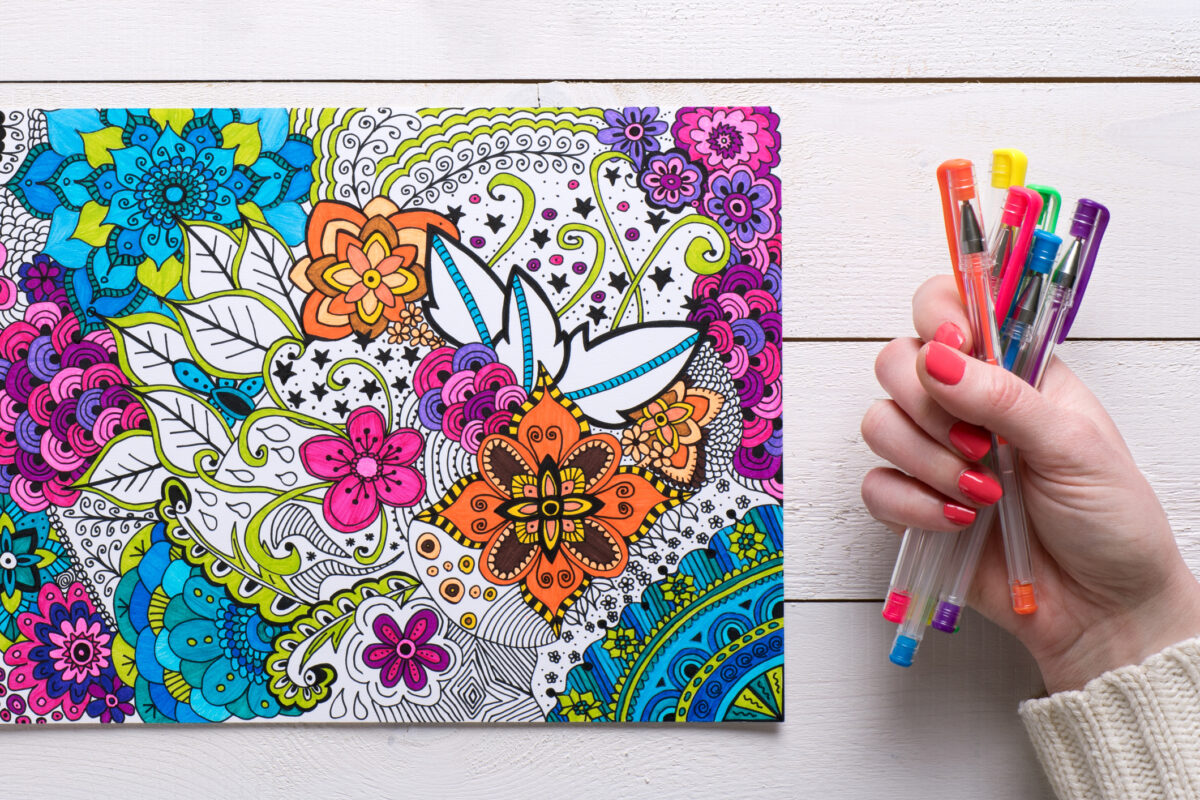
A structured creative activity such as guided painting can offer a low-barrier entry point into stress-reducing art-making.
Adult stress and anxiety rates have not gone away since the pandemic years, and neither has the search for something that actually helps. “Creative self-care” gets thrown around a lot in wellness marketing, but the phrase obscures a more interesting question. What does the clinical and psychological research actually say about creative hobbies and mental health? This piece looks at the mechanisms and the evidence base, not the anecdotes.
What the Research Says About Creative Activity and Mental Health
The link between hobbies and mental health is supported by a growing body of research. Studies have consistently found that adults who regularly engage in enjoyable leisure activities, including gardening, music and painting, tend to report better mental wellbeing and lower levels of depressive symptoms. While these findings demonstrate a strong association, they do not necessarily prove that hobbies directly prevent depression, and researchers continue to investigate the mechanisms underlying this relationship.
The American Psychiatric Association’s 2023 Healthy Minds Monthly Poll provides broader national context. It found that 46% of American adults used creative activities, including painting, crafts, music and puzzles, to help relieve stress or anxiety. The poll also reported that 71% of adults who rated their mental health as very good or excellent engaged in creative activities frequently, compared with lower proportions among those reporting poorer mental health. Although these findings show an association rather than a causal relationship, they support continued research into how creative activities may contribute to mental wellbeing.
Within that broader evidence base, structured and guided formats matter. Not every adult who wants the psychological benefit of art-making has training, confidence, or spare time to develop it from scratch. This is where accessible, pre-structured products fit into the picture. Options like adult paint by numbers kits remove the blank-canvas decision-making that stops many beginners before they start, letting someone engage in the same type of creative activity described in the research without needing prior artistic skill. The kit itself isn’t the intervention researchers are studying. It’s one accessible on-ramp into a category of behaviour that the data already supports.
The Biology of Stress Reduction Through Art-Making
A small physiological study provides preliminary evidence that art-making may influence biological markers associated with stress. A widely cited Drexel University study found that a single 45-minute art-making session produced a statistically significant reduction in cortisol, the body’s primary stress hormone, in a sample of 39 adults, regardless of whether they had any prior artistic experience. Importantly, reductions in cortisol were observed regardless of participants’ previous artistic experience: the effect wasn’t limited to people who already considered themselves “creative.”
A 2025 scoping review on hobbies and wellbeing highlighted growing evidence that hobbies, including creative activities, may support psychological wellbeing, stress management and social connection. The review also concluded that more high-quality research is needed to better understand the mechanisms involved and determine which approaches are most effective. Cortisol reduction following art-making provides one possible biological explanation for these findings, although additional research is needed to confirm how these effects translate into longer-term mental health benefits.
Flow State, Structure, and Why Guided Formats Lower the Barrier to Entry
Psychologist Mihaly Csikszentmihalyi’s concept of “flow,” a state of full absorption in a task matched to one’s skill level, is often invoked loosely in wellness writing. The more useful question for clinicians is what triggers that state reliably in adults who aren’t experienced artists.
A 2025 Frontiers in Psychology feasibility study on remote digital art-making tested exactly this. Researchers gave participants eight weekly themed art tasks, each with clear structure and a defined endpoint, and found the intervention served as effective short-term support for improving wellbeing and reducing anxiety. The structured format may play an important role in supporting participation, although further research is needed to understand which elements contribute most to the observed benefits. Open-ended creative tasks can trigger decision fatigue and self-judgment in people without training; guided formats may reduce some of that initial hesitation, which could help explain the improvements in wellbeing and anxiety reported in the study.
This connects to a broader principle in behavioural health: interventions that lower the effort required to start are more likely to be sustained. That’s part of why our piece on supportive approaches to stress management treats structured activity, rather than open-ended relaxation advice, as a more reliable starting point for people new to self-directed coping strategies.
Clinical Evidence: Art Therapy in Randomised Trials
Survey data and small feasibility studies are useful, but randomised controlled trials carry more evidentiary weight, and 2025 delivered one. A trial published in BMJ Public Health conducted across four NHS hospitals in London enrolled 129 healthcare professionals and assigned them either to six weekly 90-minute structured group art therapy sessions or to a waitlist control group. The trial found the art therapy group showed reduced burnout and mental distress compared to controls.
RCT-level evidence answers a question survey data can’t: whether the activity itself is driving the outcome, or whether people who were already coping better simply chose to take up art. A waitlist control design directly addresses that confound. The NHS trial doesn’t prove art therapy replaces clinical treatment for burnout, and the researchers don’t claim that either, but it does establish that structured group art-making produced a measurable effect beyond what time alone would produce. This provides stronger evidence than observational studies alone because participants were compared with a control group under a structured study design. For readers interested in how services are adapting to meet this kind of evidence, our coverage of mental health education efforts looks at how clinics are building these findings into patient-facing programs.
Long-Term and Social Benefits for Adults
The single-session and eight-week trials cited above point to short-term effects. Longer observational data suggest the benefits aren’t just a temporary mood bump. A 13-day diary study of 658 adults, published in the Journal of Positive Psychology, found that creative activity predicted improved mood and a stronger sense of “flourishing” the following day, an effect that ran in one direction only: creativity predicted wellbeing, not the reverse. This temporal relationship strengthens the observed association, although, as with other observational studies, it cannot establish causation.
A separate study tracking 3,725 US adults during the COVID-19 pandemic found that gardening, woodwork, DIY, and arts and crafts were associated with aspects of improved wellbeing over time, although the strength and type of benefit varied between activities. That finding is broadly consistent with the American Psychiatric Association polling data cited earlier and with the wider body of research linking regular leisure activities with better mental wellbeing.
For middle-aged and older adults especially, these activities often carry a social dimension too. Group classes, family painting sessions, and community art programs give people a reason to gather regularly, which matters for a demographic at higher risk of isolation. None of this means creative hobbies are a substitute for clinical care when someone needs it, and our piece on inclusive, accessible therapeutic care covers what to do when a hobby isn’t enough.
Conclusion
The available evidence is more measured than many wellness claims suggest, but it remains encouraging. Research indicates that regular, structured creative activity may support mood and reduce certain markers associated with stress in adults, based on findings from physiological studies, population surveys and a randomised clinical trial. The effects are unlikely to be the same for everyone, and creative hobbies should not be considered a treatment or cure for clinical depression or anxiety disorders.
As an accessible, low-cost addition to everyday stress management, creative hobbies represent a practical approach that is supported by an expanding body of scientific research. Whether the activity is pottery, gardening or guided painting, regular participation may offer meaningful mental wellbeing benefits for many adults.
Disclaimer: This article is intended for informational and educational purposes only and should not be considered medical, psychological, or mental health advice. While it discusses research on creative hobbies and their potential association with improved mental wellbeing, creative activities are not a substitute for assessment, diagnosis, or treatment by a qualified healthcare professional. Individual experiences and outcomes may vary, and the studies referenced do not establish that creative hobbies prevent or treat mental health conditions. If you are experiencing persistent stress, anxiety, depression, or other mental health concerns, seek advice from a qualified healthcare provider or mental health professional. Open MedScience does not endorse any specific products or services mentioned in this article, and readers should evaluate any products independently.
home » blog » health and wellbeing »