
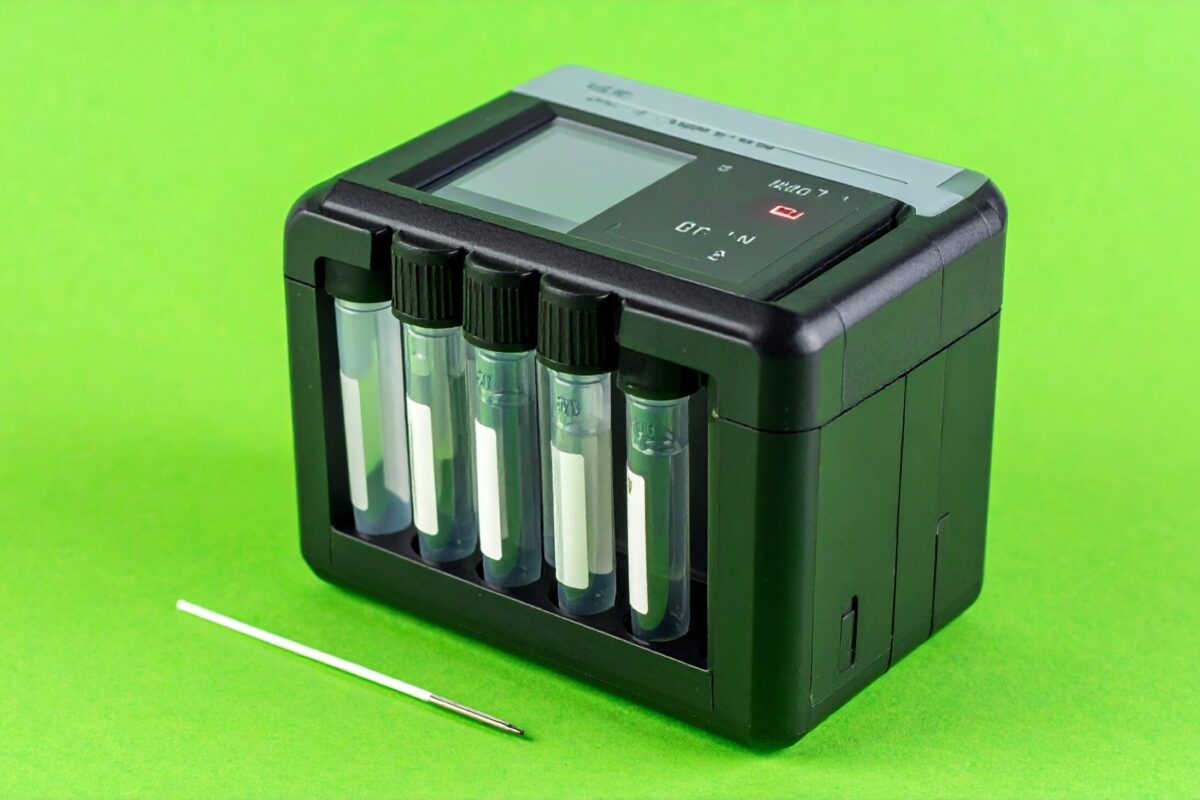
A luminometer is a critical device used for adenosine triphosphate testing in the food industry. Once people collect samples with swabs, they must activate the reagent and put the swab into the ATP meter. They will then receive a score in approximately 10 to 15 seconds, indicating the amount of contamination on the tested surface. The provided value represents all organic material, including food remnants, skin cells, and bacteria.
Although it is a holistic cleanliness measure, lower numbers indicate that the surface is relatively cleaner than one associated with higher numbers. Which factors should people consider when buying these products, and what is the best luminometer for food safety testing?
Verify the Sensitivity Statistics
Luminometers can detect invisible contamination, and that capability makes them widely used in the tightly regulated food and beverage industry. One 2024 survey of professionals working in it revealed that 76% of entities in the United States and 59% of international respondents used ATP tests for rapid results in their facilities.
People who want to follow their lead should prioritise meters that detect trace amounts of ATP on the femtomole scale. Luminometers with photomultiplier tubes offer superior sensitivity, but they are more expensive than versions equipped with less-sensitive photodiodes. Decision-makers can perform cost-benefit analyses by considering the plant shutdowns or other adverse effects that could result from uncontrolled or undetected contamination.
Check the Data Management Options
Leaders shopping for luminometers should also learn about how the products under consideration collect and manage data. Users must refer to that information internally, but they also may need to submit it to local, state, or national authorities. Functionality that allows them to read, retrieve, and store statistics will facilitate later report creation. In the U.S. alone, no fewer than 30 federal laws enforced by 15 agencies govern the country’s food supply. Satisfying those bodies is the most effective way to keep operations safe and running smoothly.
Many luminometers can transmit data to the cloud, create audit trails, or enable location tagging for future trend analysis. Those responsible for purchasing luminometers should speak with employees at numerous levels of their organisations to learn more about the most desired features that would make workers’ jobs easier and enable them to uphold transparency.
Prioritise User-Friendliness
Because workers must use luminometers regularly to verify safe conditions for preparing and consuming food, parties responsible for purchasing these products should look for features that help people naturally incorporate them into their workflows. Large, bright displays give them accurate information at a glance. Those with touch-sensitive screens may be even faster to operate, depending on individual use cases.
Battery life, weight, and overall portability are essential for people who must carry out food safety tests in unconventional environments. Food trucks are a good example, and their popularity has led to a significant increase in employment. National statistics from 2024 in the U.S. indicated that there were 44,119 workers in the mobile food services sector, and that this figure is 907% higher than the numbers recorded in 2000.
Luminometer Manufacturers Used in Food Safety Applications
Manufacturers included in this section supply luminometers that are widely used in food safety testing workflows and are designed to support regulatory compliance. Product documentation and technical specifications are typically provided to help organisations evaluate suitability for their operational requirements.
1. Charm Sciences
Charm Sciences reports that its executive leadership team has a combined industry experience exceeding 150 years, with the company focusing on the development of rapid diagnostic technologies for food safety testing and sanitation monitoring.
Key Features
| Manufactures all equipment, reagents, software, and firmware in its Massachusetts facilities | Collaborates regularly with regulators to obtain relevant validations |
| Offers customised solutions to solve problems for customers | Maintains a global presence to meet industrial needs |
2. Hygiena
Hygiena offers innovative testing products to strengthen safety in the food and healthcare industries. Headquartered in California and founded in 2002, the company continually prioritises reliable, easy-to-use goods for discerning industrial professionals. Its worldwide affiliate offices also increase its overall reach and global visibility.
Key Features
| Sells luminometers that provide results in 10 seconds | Provides excellent customer service and support |
| Has a distributor network spanning over 100 countries | Specialises in advanced technologies and patented designs |
3. Neogen
Neogen takes science-based approaches to help customers in the food and animal safety industries meet their cleanliness goals. The business prides itself on forming long-term relationships with expectation-surpassing customer service.
Key Features
| Offers products that give real-time results and have robust data-storing capabilities | Upholds a global presence in nearly 40 nations |
| Sells luminometers with one-handed designs for improved usability and ergonomics | Provides high-performing solutions for entities in all parts of the food supply chain |
4. Nelson-Jameson
Nelson-Jameson sells a wide range of luminometers and accessories. People can sort the offerings by brand, price, and other differentiators to accelerate their searches. A convenient, quick-order feature adds products to shopping carts in bulk after people input the product numbers and desired quantities.
Key Features
| Keeps more than 78,000 products in its inventory | Works with over 1,000 supplier partners |
| Operates five distribution centres | Provides numerous value-added services, including training and in-plant equipment servicing |
Methodology
The companies included in the article were selected based on their established presence in the food safety testing market and the availability of documented product support and distribution networks across multiple regions.
Luminometers Tighten Food Safety Standards
Businesses operating in the food industry are required to maintain strict hygiene standards and reliable documentation practices. Luminometers used in routine ATP testing support surface cleanliness monitoring, regulatory compliance, and the creation of verifiable data records within food safety management systems.
Disclaimer
This article is provided for general informational purposes only and does not constitute professional, regulatory, legal, or technical advice. Open MedScience does not manufacture, sell, endorse, certify, or guarantee any luminometer, testing system, reagent, or supplier mentioned in this publication. Product specifications, performance claims, regulatory status, and availability may change without notice and should always be verified directly with manufacturers or authorised distributors.
Readers are responsible for ensuring that any equipment selected complies with applicable local, national, and international food safety regulations, standards, and validation requirements. Operational decisions related to food safety testing, hygiene monitoring, and compliance should be made in consultation with qualified food safety professionals, quality assurance specialists, and relevant regulatory authorities.
Open MedScience accepts no liability for losses, damages, operational disruptions, regulatory penalties, or safety incidents arising from the use of information contained in this article. Use of any products or methods referenced is undertaken at the reader’s own risk.
Company names, trademarks, and product references remain the property of their respective owners and are included solely for informational and educational purposes.
home » blog » research methods and reproducibility »