
Laser eye surgery has reached a stage where the biggest improvements are no longer about inventing an entirely new procedure, but about refining how existing techniques are planned, personalised, and delivered. LASIK, SMILE, and surface laser treatments remain the foundations of refractive surgery, yet the way they are used in 2025 and 2026 looks increasingly sophisticated. Clinics now rely on deeper diagnostic data, more intelligent planning software, and clearer strategies for matching the right technique to the right eye.
For anyone thinking about treatment, the conversation has shifted. Rather than asking whether laser eye surgery works in general, people are now better served by asking how a specific clinic plans treatment for their eyes and why one method is recommended over another. The answers lie in personalised optics, improved diagnostics, and a growing recognition that the quality of vision matters just as much as hitting a target number on an eye chart.
Personalised LASIK and full-eye optical modelling
Traditional LASIK corrects vision by reshaping the cornea according to a glasses or contact lens prescription. Over time, this evolved into wavefront-guided and topography-guided treatments, which account for more subtle imperfections in how the eye focuses light. The latest step builds on this idea by modelling how light travels through the entire optical system of the eye, not just the front surface.
These newer approaches use ray-tracing principles to simulate the path of light from the cornea through the lens and onto the retina. The aim is to design a laser treatment that compensates for each eye’s individual optical fingerprint. In practice, this can mean sharper vision and fewer unwanted effects such as glare or halos, particularly in low-light conditions.
What makes this important for patients is that “LASIK” is no longer a single, uniform procedure. Two clinics may both offer LASIK, yet one may rely on older planning methods, while the other uses full-eye modelling and more advanced diagnostics. Understanding which approach is being used, and how stable and repeatable the measurements are can make a real difference to the final outcome.
Better diagnostics and smarter screening
Some of the most meaningful progress in laser eye surgery has come from improvements in screening rather than changes to the laser itself. If you’re comparing providers, it helps to ask what pre-op imaging and tear film work-up are included—details you can see in refractive surgery assessments in Hamilton. Modern clinics increasingly use high-resolution corneal imaging, detailed tear film assessment, and broader ocular health checks to determine whether someone is a good candidate and which technique best suits them.”
Dry eye assessment has become especially important. An unstable tear film can distort measurements and lead to visual fluctuations after surgery. Many clinics now treat dry eye first, then repeat scans once the surface of the eye is more stable. This extra step can improve accuracy and patient comfort, yet it requires time, experience, and a willingness to delay surgery when needed.
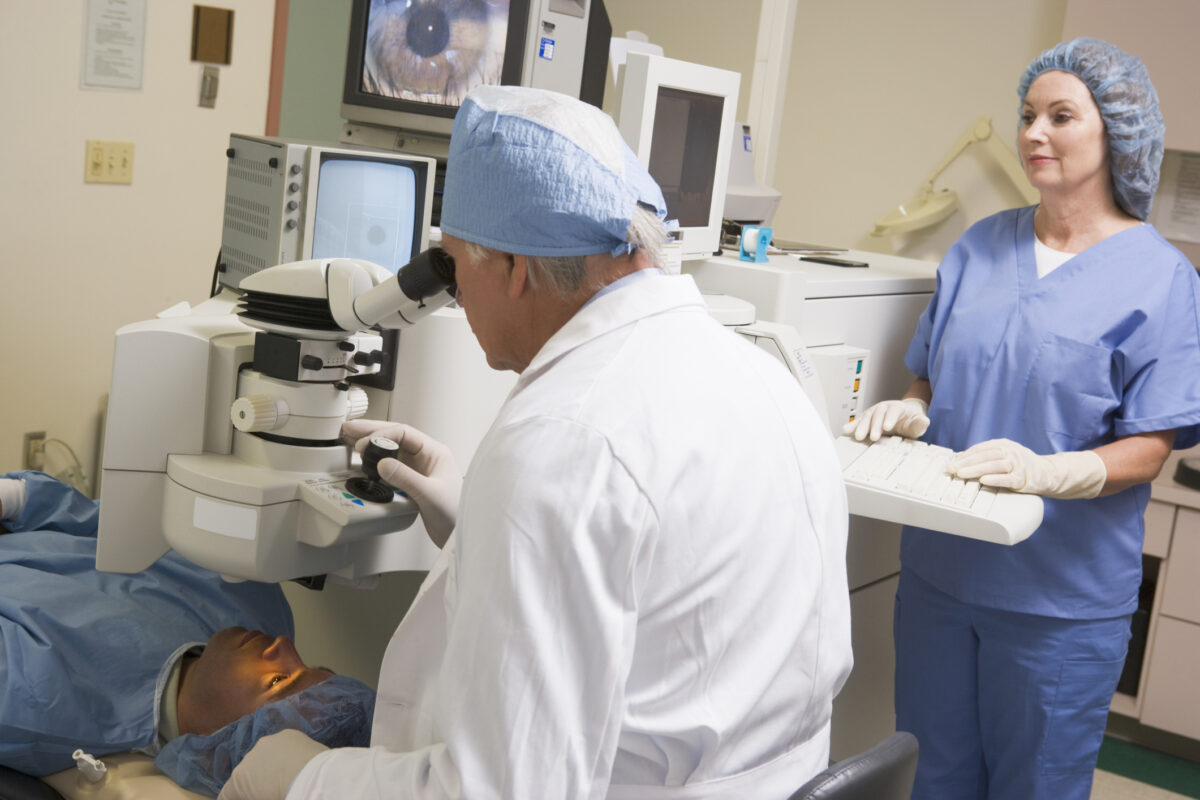
Artificial intelligence is also starting to play a supporting role in diagnostics and planning. AI systems can help analyse complex scan data, highlight patterns linked to higher risk, and support consistency across large numbers of patients. During surgery, modern eye-tracking technology compensates for tiny, involuntary eye movements, keeping the laser precisely aligned throughout the treatment.
Together, these developments push refractive surgery towards a more controlled and predictable process, where fewer decisions are made on incomplete or unstable data.
SMILE and the evolution of small-incision surgery
SMILE, or Small Incision Lenticule Extraction, has become a well-established alternative to LASIK, particularly for short-sighted patients. Instead of creating a large flap, a femtosecond laser forms a small disc of tissue within the cornea, which is removed through a short incision. This reshapes the cornea while preserving more of the surface structure and nerves.
One reason SMILE has gained popularity is its association with a lower risk of postoperative dry eye in some patients. Recovery is often quick, and the absence of a flap can be appealing to people with active lifestyles or who play contact sports.
Recent developments, often referred to as “SMILE Pro“, focus on faster laser systems, smoother workflows, and improved precision. These upgrades reduce treatment time and aim to deliver more consistent results. There is also ongoing work to expand the range of prescriptions that can be treated, including efforts to improve outcomes for far-sighted patients, an area that has historically been more challenging for some corneal procedures.
As with LASIK, the key point is that SMILE is not a single static technique. The platform, software, and surgeon experience all influence outcomes, and patients benefit from understanding where a clinic sits within this evolving picture.
Topography-guided treatments and visual quality
Another clear trend is a stronger focus on overall visual quality rather than simply achieving 20/20 vision. Many people with “perfect” eyesight on a chart still notice ghosting, starbursts, or reduced contrast, particularly at night. These issues are often linked to subtle irregularities in the corneal surface.
Topography-guided treatments use detailed maps of the cornea to address these irregularities alongside standard refractive errors. In suitable eyes, this can improve clarity and reduce visual disturbances that matter in everyday life, such as night driving or prolonged screen use.
For patients, this means consultations are becoming more nuanced. A recommendation might be based not only on prescription strength, but on how regular the corneal shape is and how the eye performs under different lighting conditions. This approach rewards clinics that invest in advanced diagnostics and take the time to explain what the maps actually show.
Surface laser procedures still have an important role
Although LASIK and SMILE attract most attention, surface laser procedures such as PRK and LASEK remain relevant. These techniques remove the corneal surface layer before reshaping it, avoiding the need to create a flap. They are often used when the cornea is thinner, when certain corneal patterns are present, or when occupational factors favour a flap-free approach.
Surface treatments usually involve more discomfort in the early days after surgery and a slower visual recovery. However, long-term visual outcomes can be excellent, and modern pain control and healing protocols have improved the patient experience compared with earlier generations of treatment.
What has changed most is not the laser itself, but how carefully these procedures are selected and managed. Better screening and clearer communication help ensure that patients understand the short-term trade-offs in exchange for a result that suits their eye health.
Presbyopia and blended vision strategies
As the population seeking laser eye surgery gets older, presbyopia has become a central issue. From the late 30s onwards, the eye gradually loses its ability to focus up close, making reading glasses a reality for many people.
Clinics now offer a range of strategies to address this, including blended vision approaches in which one eye is slightly adjusted for near tasks and the other for distance. Some people adapt well to this, while others find it uncomfortable, which makes careful pre-operative discussion essential.
Laser correction is also increasingly considered alongside lens-based solutions for presbyopia, especially as cataract surgery techniques advance. The boundary between corneal refractive surgery and lens surgery is becoming more fluid, with treatment plans built around how a person’s vision is likely to change over the next decade, not just the next year.
Emerging research beyond lasers
Perhaps the most intriguing developments are still confined to research settings. Scientists are exploring ways to reshape the cornea using electrical and chemical methods rather than lasers. The idea is to alter the mechanical properties of corneal tissue so that its curvature changes without removing tissue.
These approaches are not available in clinics and remain experimental, yet they point to a broader shift in thinking. Vision correction is increasingly seen as a problem of optics, tissue mechanics, and healing biology combined. Even if laser-based methods remain dominant for years to come, future options may look very different from today’s procedures.
What this means for someone considering surgery
For patients, the abundance of options can feel confusing. The most useful step is to focus less on brand names and more on process. A strong clinic will explain how your eyes are measured, how stable those measurements are, and why a particular technique suits you. It will also discuss dry eye, night vision, and realistic expectations for work and leisure activities.
Cost comparisons should also be made carefully. The price of surgery reflects not only the laser time but also the quality of screening, the surgeon’s experience, follow-up care, and the clinic’s willingness to refine or enhance the result if needed.
Laser eye surgery in 2025 and 2026 is not about a single breakthrough, but about many small, meaningful improvements working together. For the right candidates, these changes make outcomes more predictable, more comfortable, and better aligned with real-world visual needs.
Laser eye surgery in 2025–2026: questions and answers
What has changed most in laser eye surgery recently?
The biggest change is not a brand-new procedure, but how existing treatments are planned and tailored. Clinics now rely on more detailed eye scans and advanced planning software that models how light travels through the whole eye. This allows treatment to be adjusted to each person’s individual optical characteristics, rather than relying solely on a glasses prescription.
Is LASIK still the main option?
LASIK remains one of the most commonly performed procedures, but it is no longer a single, standardised treatment. Modern LASIK can involve personalised planning methods that aim to improve clarity and reduce side effects such as glare or halos. What matters most is how the treatment is designed and delivered, not simply the name “LASIK”.
What is meant by “personalised” or “custom” LASIK?
Personalised LASIK uses detailed measurements of the eye to design the laser pattern. Newer systems go further by modelling how light passes through the entire eye, from the cornea to the retina. This approach aims to correct subtle optical imperfections that can affect contrast and night vision, not just basic short- or long-sightedness.
How important are eye scans and diagnostics now?
They are central to modern laser eye surgery. High-resolution corneal imaging, tear film assessment, and broader eye health checks help determine who is suitable and which technique is best. Many clinics now repeat scans when the eye surface is unstable, particularly when dry eye is present, to improve accuracy and post-surgical comfort.
Is artificial intelligence actually used in clinics?
Yes, though mainly as a support tool rather than a replacement for clinical judgement. AI can help interpret complex scan data, highlight patterns linked to higher risk, and support consistency in planning. During surgery, eye-tracking systems respond to tiny natural movements to keep the laser precisely aligned.
What is SMILE and how has it developed?
SMILE, or Small Incision Lenticule Extraction, reshapes the cornea by removing a small piece of tissue through a short incision rather than creating a large flap. Recent developments focus on faster laser systems and smoother workflows, often referred to as SMILE Pro. These upgrades aim to improve efficiency and consistency while keeping the benefits of a flap-free approach.
Who might benefit most from SMILE?
SMILE is commonly chosen for people who are short-sighted, particularly those concerned about dry eye or involved in contact sports. Recovery is usually quick, and some patients prefer the idea of avoiding a corneal flap. Suitability still depends on prescription range, corneal shape, and individual eye health.
Are surface laser treatments still used?
Yes. Procedures such as PRK and LASEK remain important options, especially for people with thinner corneas or certain corneal patterns. They do involve more discomfort and slower visual recovery in the early stages, but long-term results can be excellent. Improvements in pain control and follow-up care have made these treatments easier to manage than in the past.
What does “topography-guided” treatment mean?
Topography-guided treatments use detailed maps of the corneal surface to address irregularities as well as standard refractive errors. This can improve visual clarity and reduce ghosting and starbursts, particularly in low-light conditions. The goal is a better quality of vision, not just achieving a number on an eye chart.
How does laser eye surgery deal with presbyopia?
Presbyopia, the age-related loss of near focus, is now a major consideration. Clinics may offer blended or monovision strategies, in which one eye is slightly adjusted for near vision and the other for distance. This approach works well for some people but not for everyone, which makes careful discussion and realistic expectation-setting essential.
Are laser procedures combined with other vision correction methods?
Increasingly, yes. Laser correction is often considered alongside lens-based options, particularly for people in their 40s and 50s. Treatment plans are more forward-looking, taking into account how vision is likely to change over time rather than focusing only on current needs.
Are there any new non-laser treatments on the horizon?
Researchers are exploring ways to reshape the cornea using electrical and chemical techniques rather than lasers. These methods aim to alter the mechanical properties of corneal tissue without removing it. They are still experimental and not available clinically, but they point towards possible future alternatives.
Is laser eye surgery safer now than before?
Outcomes have improved through better screening, planning, and follow-up rather than radical changes to the laser itself. Modern techniques are generally safe for suitable candidates and have high satisfaction rates. The emphasis is increasingly on selecting the right patients and the right procedure.
What questions should someone ask a clinic today?
It is sensible to ask how your eyes will be assessed, how dry eye is managed, and why a particular technique is recommended for you. You should also ask about expected night vision, enhancement policies, and how outcomes are audited within the clinic.
Is cost a good indicator of quality?
Price reflects more than the procedure itself. It usually includes diagnostics, surgeon experience, aftercare, and the clinic’s willingness to refine results if needed. Comparing costs without understanding what is included can be misleading.
What is the overall direction of laser eye surgery?
The field is moving towards greater personalisation, better use of diagnostic data, and a stronger focus on real-world visual quality. Rather than chasing novelty, progress is coming from smarter planning and clearer alignment between the procedure and the individual eye.
Disclaimer
This article is provided for general information and educational purposes only. It is not intended to replace professional medical advice, diagnosis, or treatment. Laser eye surgery is a medical procedure that carries potential risks and benefits, which can vary significantly between individuals based on eye health, prescription, age, lifestyle, and other clinical factors.
The information presented reflects current understanding and clinical practice trends in laser eye surgery during 2025–2026. Medical technologies, techniques, and guidelines continue to evolve, and some approaches discussed may not be suitable, available, or recommended for every patient or in every clinical setting.
Readers should not use this article as a basis for making decisions about laser eye surgery without consulting a qualified ophthalmologist or refractive surgeon. A full eye examination, detailed diagnostic testing, and a personalised clinical assessment are essential to determine suitability, risks, and expected outcomes.
Open MedScience does not endorse any specific clinic, device, laser platform, or surgical technique mentioned or implied within this content. References to procedures such as LASIK, SMILE, PRK, or emerging technologies are descriptive rather than promotional.
Individual outcomes can vary, and no surgical or medical procedure can guarantee perfect vision or complete freedom from glasses or contact lenses. Potential side effects, limitations, and the possibility of further treatment should always be discussed directly with a licensed eye care professional.
By reading this article, you acknowledge that Open MedScience is not responsible for decisions made on the basis of this information and that any medical concerns should be addressed with an appropriately qualified healthcare provider.
home » blog » medical technologies »