

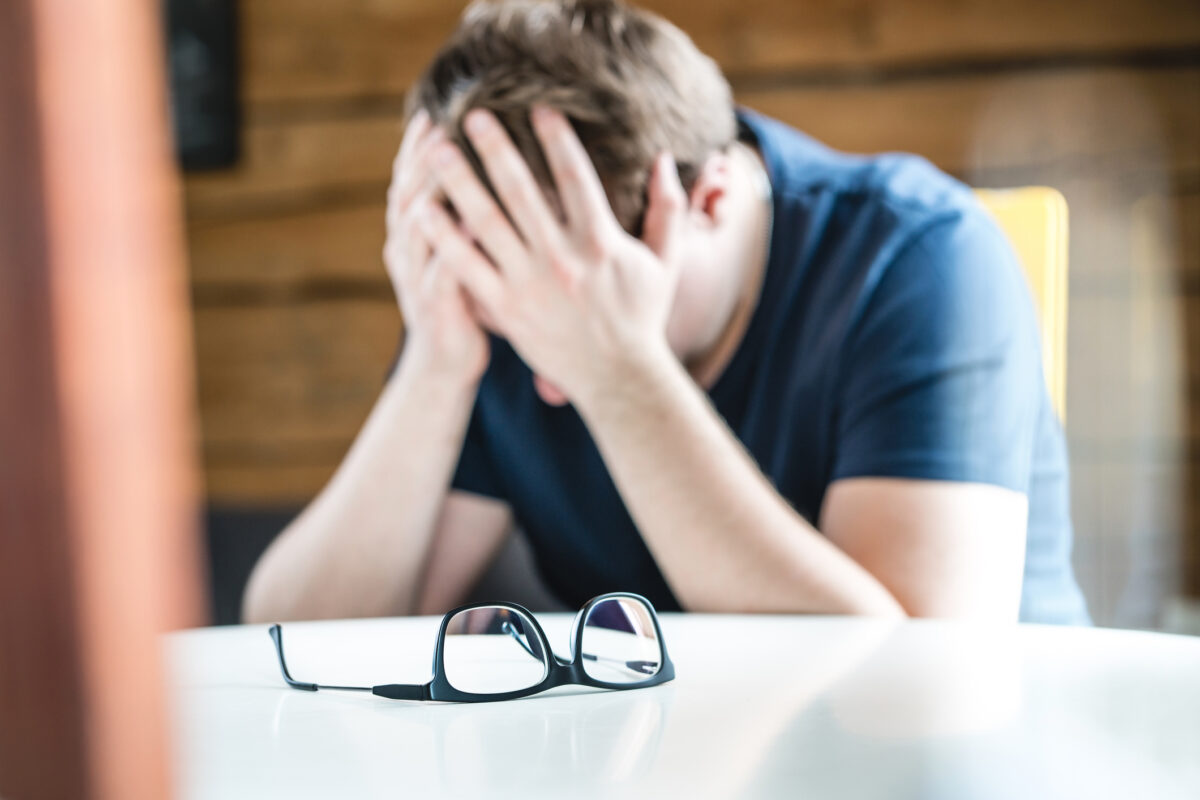
For many people, marijuana feels like relief. After a hard day, a stressful week, or a stretch of low moods, lighting up can feel like the easiest way to quiet the noise. But increasingly, researchers and clinicians are asking a harder question: is marijuana actually helping, or is it quietly making things worse?
The relationship between marijuana and depression is more complicated than most people realize. It is not simply a matter of cause and effect, but a two-way street that can trap people in a cycle that is difficult to recognize and even harder to break.
Understanding this connection is one of the most important things you can do for your long-term mental health.
What Does the Research Actually Say?
The short answer is that regular marijuana use is associated with a higher risk of depression, particularly for people who start using early or who use heavily over time. A landmark review published in JAMA Psychiatry found that people who used cannabis regularly were significantly more likely to develop depression and anxiety compared to non-users.
What makes this finding especially important is the direction of the relationship. While some people turn to marijuana because they are already struggling with depression, the research suggests that marijuana use itself can contribute to the onset or worsening of depressive symptoms, independent of prior mental health history.
Why Marijuana and Depression Are So Closely Linked
The brain’s endocannabinoid system plays a central role in regulating mood, motivation, and emotional processing. THC, the primary psychoactive compound in marijuana, directly affects this system. In the short term, it can produce feelings of calm or euphoria. Over time, however, frequent THC exposure can disrupt the brain’s natural ability to regulate mood on its own.
This disruption can look a lot like depression: low motivation, emotional flatness, difficulty experiencing pleasure, and a general sense of disconnection. These are not just withdrawal symptoms. For some people, they become the new baseline.
The Self-Medication Trap
One of the most common patterns clinicians see is what is often called the self-medication cycle. A person begins to feel depressed or anxious. Marijuana offers temporary relief. Over time, the brain adjusts to the presence of THC and requires more of it to achieve the same effect. Meanwhile, the underlying depression goes unaddressed and often deepens.
This pattern is particularly common among young adults, who may not yet have access to or awareness of professional mental health support. It is also common in communities where marijuana is widely accepted socially, making it easy to normalize use that has quietly become compulsive.
When Recreational Use Becomes Something More
Not everyone who uses marijuana will develop depression, and not everyone who is depressed uses marijuana to cope. But the line between recreational use and problematic use can blur gradually. A few signs that marijuana use may be affecting your mental health include:
Using marijuana to manage anxiety, sadness, or stress regularly, finding it difficult to feel relaxed or happy without it, noticing that your motivation or interest in activities has declined over time, and feeling like you need to use more than you used to to feel the same effect.
If any of these feel familiar, it is worth taking a closer look at the role marijuana is playing in your life.
What About High-Potency Products?
The marijuana available today is significantly more potent than what was available even ten or fifteen years ago. THC concentrations in many commercial products now routinely exceed 20 to 30 percent, compared to an average of around 4 percent in the 1990s. Concentrates and vape products can reach even higher levels.
This matters for the depression conversation because higher THC concentrations are associated with a greater disruption to the endocannabinoid system. Research suggests that high-potency cannabis use is more strongly linked to psychiatric symptoms, including depression and psychosis, than lower-potency use.
CBD, THC, and the Balance That Matters
It is also worth noting that many high-potency products contain very little CBD, the non-intoxicating compound in cannabis that may have some protective effects on mood. Historically, whole-plant marijuana contained a more balanced ratio of THC to CBD. Today’s concentrated products have largely eliminated that balance, potentially increasing the psychiatric risk for regular users.
Co-Occurring Disorders: When Depression and Addiction Overlap
Depression and substance use disorders frequently occur together. In clinical settings, this is called a co-occurring disorder or dual diagnosis. When someone is dealing with both, treating only one condition rarely works. The untreated condition tends to pull the other one back.
This is why integrated treatment, which addresses both mental health and substance use at the same time, is considered the gold standard of care. Programs that specialize in co-occurring disorders, including a Boise rehab for addiction and mental health, understand that recovery from marijuana dependence and recovery from depression are deeply connected processes that need to be worked through together.
What Integrated Treatment Actually Looks Like
Integrated treatment for co-occurring depression and marijuana use typically includes a combination of individual therapy, psychiatric evaluation, and medication management when appropriate, group support focused on both mood and substance use, and skill-building around emotional regulation and relapse prevention.
Cognitive behavioral therapy is particularly well-supported for both conditions and helps people identify the thought patterns and triggers that connect their mood and their use.
Can Stopping Marijuana Use Improve Depression?
This is one of the questions people most often ask, and the honest answer is: it depends, and it takes time. For many people, stopping marijuana use does lead to meaningful improvement in mood, motivation, and emotional stability. But the first few weeks can actually feel harder before they feel better.
During early abstinence, the brain is recalibrating its endocannabinoid system. This can temporarily increase anxiety, irritability, and low mood. This is one of the reasons professional support is so valuable during this period. Having clinical guidance and a structured environment makes it significantly more likely that a person will get through that difficult window and begin to experience genuine improvement.
What to Expect in the First Weeks Without Marijuana
In the first one to three weeks without marijuana, people often report sleep disruption, increased irritability, a return of emotions that had been numbed, and difficulty concentrating. These symptoms are real, and they can feel discouraging.
But for most people, they are temporary. Research suggests that mood and cognitive function continue to improve for weeks and months after stopping use, particularly in people who also engage in therapy and structured support.
Taking the Connection Seriously
The cultural conversation around marijuana has shifted dramatically in recent years, and for good reason. Legalization, medical use, and growing social acceptance have all changed the landscape. But acceptance does not equal safety for every person in every circumstance.
If you are someone who lives with depression, a family history of mental health conditions, or a tendency toward anxiety, the relationship between your mental health and your marijuana use deserves serious and honest attention. Not judgment, not shame, but genuine curiosity and care.
The goal is not to make marijuana the villain. The goal is to help you clearly enough to make choices that actually support your wellbeing. And if those patterns have already taken on a life of their own, reaching out for support is not a sign of weakness. It is one of the most clear-headed decisions you can make.
References
Mammen G, Rueda S, Roerecke M, Bonato S, Lev-Ran S, Rehm J. Association of Cannabis With Long-Term Clinical Symptoms in Anxiety and Mood Disorders: A Systematic Review of Prospective Studies. J Clin Psychiatry. 2018 Jun 5;79(4):17r11839. doi: 10.4088/JCP.17r11839. PMID: 29877641.
Lev-Ran S, Roerecke M, Le Foll B, George TP, McKenzie K, Rehm J. The association between cannabis use and depression: a systematic review and meta-analysis of longitudinal studies. Psychol Med. 2014 Mar;44(4):797-810. doi: 10.1017/S0033291713001438. PMID: 23795762.
Volkow ND, Baler RD, Compton WM, Weiss SR. Adverse health effects of marijuana use. N Engl J Med. 2014 Jun 5;370(23):2219-27. doi: 10.1056/NEJMra1402309. PMID: 24897085; PMCID: PMC4827335.
ElSohly MA, Mehmedic Z, Foster S, Gon C, Chandra S, Church JC. Changes in Cannabis Potency Over the Last 2 Decades (1995-2014): Analysis of Current Data in the United States. Biol Psychiatry. 2016 Apr 1;79(7):613-9. doi: 10.1016/j.biopsych.2016.01.004. Epub 2016 Jan 19. PMID: 26903403; PMCID: PMC4987131.
Disclaimer
This article is for general information and educational purposes only. It is not intended to provide medical advice, diagnosis, treatment, or a substitute for professional mental health or addiction support. Cannabis use and depression can affect people differently, and any concerns about mood, substance use, dependence, withdrawal, anxiety, or suicidal thoughts should be discussed with a qualified doctor, psychiatrist, psychologist, counsellor, or addiction specialist.
Open MedScience does not encourage the use of cannabis or any other substance as a way to manage depression, anxiety, stress, or other mental health concerns. Anyone considering reducing or stopping cannabis use, especially after heavy or long-term use, should seek appropriate clinical guidance. If you are experiencing a mental health crisis or feel at risk of harming yourself, contact emergency services or a crisis support service immediately.
home » blog » health and wellbeing »