

Telehealth is no longer an experimental add-on to healthcare delivery. It is now embedded in routine outpatient consultations, mental health pathways, chronic disease management programmes, and multidisciplinary collaboration. Health systems that once viewed virtual care as supplementary now treat it as an integral part of their infrastructure.
Yet while clinical adoption has accelerated, technical implementation remains a persistent challenge. Developing secure, scalable, regulation-aligned communication systems from scratch demands substantial engineering effort. Real-time media handling, encryption protocols, NAT traversal, bandwidth optimisation, recording architecture, data storage governance, and compliance documentation all introduce complexity. Even well-resourced digital health teams can find that building internally leads to long development cycles and mounting maintenance obligations.
Telehealth APIs provide an alternative model. Rather than constructing communication layers internally, organisations can integrate established SDKs and APIs into existing web or mobile applications. This approach externalises infrastructure management while preserving control over workflow design, branding, and clinical integration.
For healthcare providers seeking to accelerate deployment without compromising data protection standards, telehealth APIs can dramatically reduce build time. Below, we examine five platforms commonly used to implement secure video and communication capabilities in healthcare environments.
1. iotum
The iotum telehealth video conferencing API is structured to enable rapid deployment of browser-based clinical communication.
Unlike fully custom communication stacks, API-based approaches allow development teams to embed secure video, voice, and messaging functionality directly into existing platforms with limited infrastructure overhead. In practice, this can significantly shorten implementation timelines, particularly when internal engineering capacity is focused on other system integrations.
The platform supports:
- Real-time video and voice calling
- Browser-native participation without downloads
- Messaging functionality
- Appointment scheduling integration
- REST APIs and webhooks for workflow automation
- AI-assisted transcription and analytics
From a patient access perspective, browser-based consultation eliminates friction from application downloads and device compatibility barriers. This is particularly relevant in rural settings or among populations with varied levels of digital literacy.
For clinical organisations integrating telehealth into electronic patient record (EPR) systems, the ability to connect through standard APIs and webhook triggers can streamline appointment flows, notifications, and session logging. Rather than maintaining media servers, development teams can focus on interoperability with clinical systems.
Best suited for organisations seeking rapid deployment of live consultation functionality within existing healthcare platforms.
2. Amazon Chime SDK
The Amazon Chime SDK provides programmable communication components built on AWS infrastructure. It supports audio, video, screen sharing, and messaging within web and mobile applications.
For healthcare organisations already operating within AWS ecosystems, the SDK can align closely with existing cloud strategies. It allows teams to build customised telehealth environments while leveraging Amazon’s global infrastructure footprint.
Key features include:
- Multi-participant video sessions
- Real-time messaging
- Noise suppression through Amazon Voice Focus
- Live transcription using Amazon Transcribe
- Recording storage within Amazon S3
- Visual privacy controls, such as background blur
The SDK approach offers flexibility but typically requires more active development involvement than plug-and-play APIs. Engineering teams must design the user interface, authentication layers, and workflow logic while integrating the SDK’s media capabilities.
For large healthcare enterprises building bespoke digital platforms, this model allows deep architectural control. However, it may involve longer build cycles than more preconfigured telehealth APIs.
Best suited for enterprise healthcare systems developing customised telehealth solutions on AWS.
3. Sinch Voice & Video API
Sinch offers programmable voice and video APIs, along with broader communications services, including SMS, verification, and telephony.
In healthcare settings, this multichannel capability can support not only video consultations but also appointment reminders, authentication workflows, and patient engagement messaging.
Technical features include:
- HD video and voice communication
- Encrypted transmission
- App-to-app and app-to-phone calling
- Global telephony infrastructure
- AI-enabled text-to-speech
- SDKs for iOS, Android, and JavaScript
For organisations developing mobile-first telemedicine applications, Sinch’s cross-platform support may simplify implementation. Rather than integrating multiple vendors for messaging, calling, and verification, teams can centralise communication services.
However, as with other programmable APIs, development teams must build and manage user interfaces and workflow logic. The API reduces infrastructure burden but does not eliminate development design responsibilities.
Best suited for telemedicine platforms requiring integrated messaging, telephony, and video communication within a unified vendor ecosystem.
4. Cloudinary Video API
Cloudinary’s Video API focuses on video hosting, optimisation, and delivery rather than live clinical consultation. While it is not a real-time telehealth platform, it can play an important role in broader digital health ecosystems.
Healthcare organisations increasingly require structured video libraries for:
- Patient education materials
- Recorded procedures
- Professional training
- Continuing medical education
- Departmental knowledge repositories
Cloudinary supports adaptive bitrate streaming, automated transcoding, AI-driven captioning, and analytics tracking. By automatically handling compression and device compatibility, the platform reduces operational overhead for video distribution.
In telehealth contexts, recorded consultations or asynchronous video exchanges may complement live appointments. Cloudinary’s infrastructure can support secure storage and distribution of such materials.
Best suited for healthcare providers managing extensive video content alongside live telehealth services.
5. Vimeo Developer API
The Vimeo Developer API enables structured video hosting with programmatic control over uploads, playback, and privacy settings.
Key capabilities include:
- Automated transcoding
- Domain-level privacy controls
- Password-protected access
- Customisable player SDKs
- 4K hosting support
- Team-based content management
In healthcare environments, Vimeo is generally better suited to educational and recorded content than to real-time consultation. For organisations building secure video libraries or training portals, the platform’s privacy controls and hosting stability may reduce development effort compared with building proprietary streaming infrastructure.
It can also support the archiving of recorded consultations, where permitted by governance frameworks.
Best suited for structured healthcare content distribution rather than live telehealth delivery.
Development Time: Where Savings Actually Occur
The claim that telehealth APIs can “cut development time in half” depends on context. Savings typically arise in four areas:
1. Infrastructure build avoidance: Constructing WebRTC servers, TURN/STUN services, encryption layers, and recording pipelines is resource-intensive. APIs externalise this complexity.
2. Maintenance reduction: Media infrastructure requires ongoing monitoring, patching, and scaling. Using established APIs transfers much of this responsibility to the provider.
3. Faster pilot deployment: Proof-of-concept projects can be launched rapidly when communication layers are pre-built.
4. Regulatory documentation support: Established vendors often provide compliance documentation, easing governance review processes.
However, APIs do not remove the need for integration planning. Workflow alignment, identity management, EPR connectivity, and patient authentication still require careful design.
Regulatory and Security Considerations
Speed should never supersede compliance. Healthcare organisations in the UK and EU must consider:
- GDPR data processing obligations
- Data hosting jurisdiction
- Encryption standards
- Audit logging
- Access controls
- NHS Data Security and Protection Toolkit alignment
- Clinical risk assessment requirements
In the United States, HIPAA compliance remains central, including Business Associate Agreements where required.
Beyond regulation, patient trust is critical. Transparent communication about data usage and storage strengthens digital care adoption.
Integration with Clinical Systems
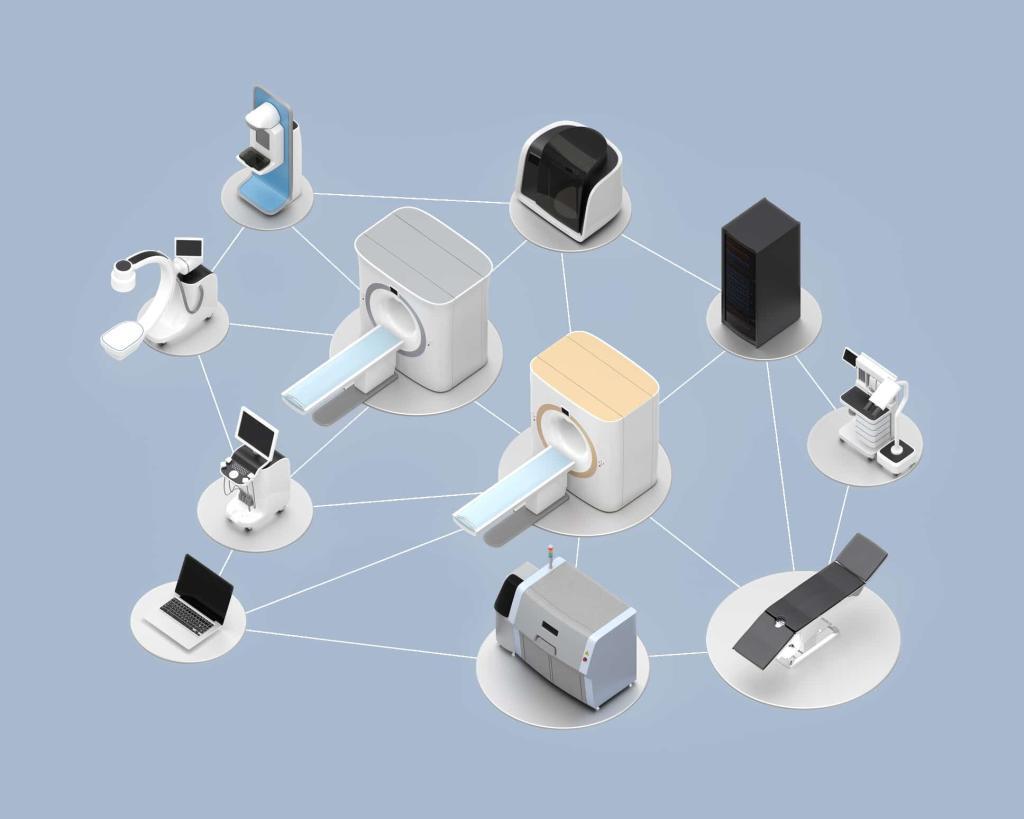
Telehealth does not operate in isolation. To deliver operational value, APIs must integrate with:
- Electronic Patient Records
- Radiology Information Systems
- PACS where imaging review occurs during consultation
- Appointment scheduling platforms
- Identity and authentication systems
A technically sophisticated API that does not integrate smoothly with clinical infrastructure may create operational friction rather than improve efficiency.
Development teams should therefore evaluate not only media quality but also interoperability capacity.
Choosing the Right Platform
Selecting a telehealth API depends on organisational priorities.
If the goal is rapid deployment of live consultation, platforms that offer browser-based access and simplified integration may reduce build time most effectively.
If enterprise control and customisation are priorities, SDK-based models within existing cloud ecosystems may be more appropriate.
If the primary requirement is structured video hosting rather than live interaction, content-focused platforms may suffice.
There is no universal solution. The optimal choice aligns with existing architecture, governance requirements, internal development capacity, and long-term digital strategy.
The Future of Telehealth Infrastructure
Telehealth is evolving beyond simple video calls. Emerging developments include:
- AI-assisted consultation summaries
- Automated triage systems
- Integrated remote monitoring
- Secure asynchronous communication models
- Enhanced accessibility features
As these capabilities expand, API-based integration models are likely to remain central. Rather than building monolithic platforms internally, healthcare organisations increasingly assemble modular systems using interoperable components.
Reducing development time is not simply about coding efficiency. It is about architectural strategy — selecting infrastructure models that minimise unnecessary complexity while supporting secure, scalable clinical care.
Telehealth APIs, when evaluated carefully and integrated responsibly, can significantly accelerate the deployment of digital health. For organisations balancing innovation with regulatory responsibility, efficiency may determine how quickly virtual care services mature from pilot programmes into routine clinical pathways.
In an environment where patient expectations continue to evolve, the ability to implement a secure digital consultation infrastructure swiftly is no longer a competitive advantage. It is a baseline requirement.
Disclaimer
This article is provided for informational and educational purposes only and does not constitute technical, legal, regulatory, or procurement advice. The platforms discussed are referenced based on publicly available information at the time of publication. Inclusion does not imply endorsement, certification, or preferential recommendation by Open MedScience.
Healthcare organisations should conduct independent technical evaluation, due diligence, and compliance assessment before integrating any telehealth API or communication infrastructure into clinical environments. Regulatory requirements, including GDPR, HIPAA, NHS data security standards, and other jurisdictional obligations, vary according to geography, use case, and implementation architecture.
Open MedScience makes no representations regarding performance, security, regulatory alignment, or development time savings associated with any specific vendor. Implementation outcomes depend on system design, governance controls, integration planning, and organisational context.
Readers are encouraged to seek appropriate professional advice before making procurement or technical decisions.
home » blog » medical technologies »