

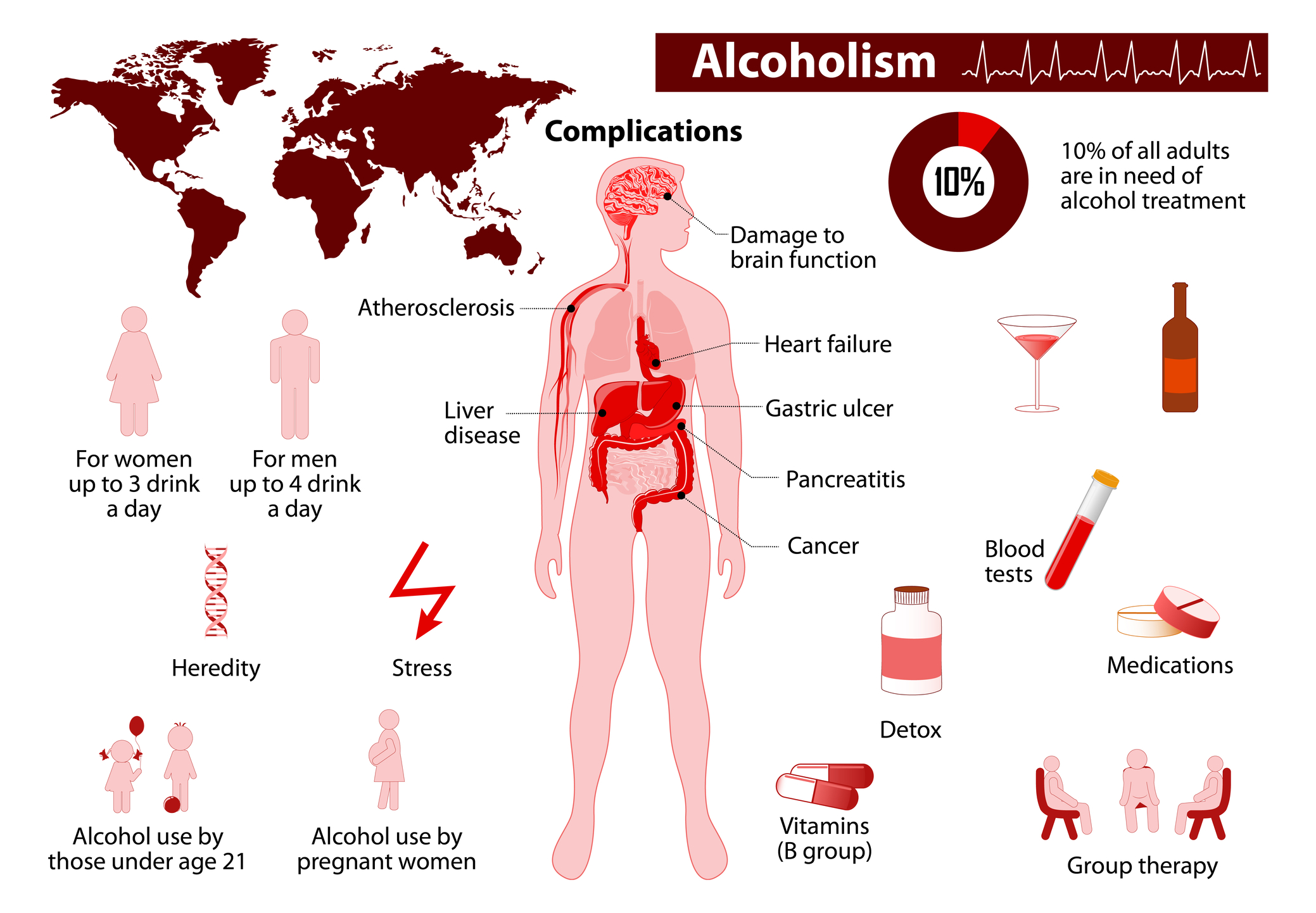
Detoxing at home sounds appealing for all the obvious reasons. It’s private, familiar, and free. For someone who has been struggling with alcohol or drug dependence, the idea of going through withdrawal in their own bed, surrounded by their own things, can feel far safer than checking into a facility. But that sense of comfort can be misleading and, in some cases, genuinely dangerous.
The truth is that detox, when done without medical supervision, carries real and sometimes life-threatening risks. Understanding what those risks are and why they exist is one of the most important things a person can do before deciding how to approach withdrawal.
Why Detox Is More Than Just Feeling Sick
Many people assume that withdrawal is simply a matter of feeling terrible for a few days and then coming out the other side. For some substances and some people, that is roughly accurate. But for others, withdrawal is a medical event that requires close monitoring.
The Body’s Dependence Goes Deeper Than Habit
When someone uses substances like alcohol, benzodiazepines, or opioids consistently over time, the central nervous system adapts to their presence. The brain recalibrates its chemistry to function in an environment where those substances are always present. When the substance is suddenly removed, the nervous system has to readjust, and that process does not always go smoothly.
This is why withdrawal is not simply a psychological experience. It involves the cardiovascular and neurological systems, and sometimes the respiratory system. The body is, in a real sense, trying to relearn how to regulate itself.
The Specific Risks of Detoxing at Home
Seizures and Neurological Complications
Alcohol withdrawal is one of the most medically significant withdrawal syndromes in existence. A condition called alcohol withdrawal seizures can develop within 24 to 48 hours of the last drink, and in its most severe form, alcohol withdrawal can progress to delirium tremens (DTs), which carries a mortality rate as high as 37 per cent when left untreated, according to the National Library of Medicine.
Seizures can occur without any warning signs. For someone detoxing alone at home, a seizure represents an immediate medical emergency with no one present to respond.
Benzodiazepine withdrawal carries similar risks and should not be attempted outside of a medically supervised environment under any circumstances.
Dangerous Dehydration and Electrolyte Imbalances
Withdrawal from many substances causes vomiting, diarrhoea, and profuse sweating. This is uncomfortable in a supervised facility. At home, it can lead to dangerous levels of dehydration and electrolyte loss that affect heart rhythm and organ function.
Severe cases of dehydration are not manageable with water alone. They often require IV fluids and medical monitoring, neither of which is available in a home setting.
Psychological Crises During Withdrawal
The emotional and psychological dimensions of withdrawal are often underestimated. Anxiety, paranoia, depression, and in some cases, hallucinations are common features of withdrawal from several substance types.
Without support from trained clinicians, these experiences can feel overwhelming and can lead to impulsive decisions, self-harm, or a return to substance use simply to make the symptoms stop.
This is precisely why clinical support is not a luxury during detox. It is a structural part of the process.
What About Tapering at Home?
Tapering Has Limitations Outside a Clinical Setting
A common approach people attempt on their own is gradually reducing their substance use over time, to ease the body off the substance more gently. For certain situations and substances, tapering is a legitimate clinical strategy. But it requires precision, consistency, and monitoring that is very difficult to maintain without professional support.
Most people who attempt self-directed tapering find that cravings and withdrawal discomfort make it nearly impossible to stick to a rigid reduction schedule. And in situations where the substance is alcohol, accurately estimating intake and following a structured taper is genuinely complex without clinical guidance.
Co-Occurring Health Conditions Raise the Stakes
Underlying Medical Issues Interact With Withdrawal
A significant portion of people who enter detox have underlying health conditions, whether or not they are aware of them. Liver disease, heart conditions, hypertension, nutritional deficiencies, and mental health disorders can all interact with withdrawal in ways that increase risk substantially.
For example, Wernicke’s encephalopathy, a neurological condition caused by thiamine (vitamin B1) deficiency, is a serious risk in alcohol-dependent individuals. It can develop or worsen during detox and requires prompt medical intervention. In a home detox setting, the signs can be easy to miss until the condition has already become severe.
Choosing an evidence-based detox in Albuquerque or a similar professionally staffed facility means that clinicians can assess for these conditions before detox begins and manage them as part of an integrated treatment plan.
How Medical Detox Actually Works
Supervised Detox Is Not the Same as Hospitalisation
There is a misconception that seeking professional detox means checking into a hospital or surrendering control of the experience. In reality, medically supervised detox programs offer structured, compassionate environments where patients are monitored, kept as comfortable as possible, and supported throughout the process.
Medications like benzodiazepines for alcohol withdrawal, or buprenorphine for opioid withdrawal, can significantly reduce discomfort and eliminate the most dangerous complications. These medications are not available for self-administration at home, and they make a substantial difference in both safety and the overall experience of detox.
What Does the Research Say?
Decades of clinical research consistently support medically supervised detox as the safest and most effective approach to managing withdrawal. The Substance Abuse and Mental Health Services Administration (SAMHSA) identifies medical supervision as a core component of safe detox across substance types.
Studies also show that patients who complete medically supervised detox are more likely to engage with ongoing treatment compared to those who attempt detox independently, which matters because detox alone does not constitute treatment. It is the first step in a longer recovery process.
Questions People Often Ask About Home Detox
Can I detox from alcohol at home if I’ve done it before without problems?
Prior successful home detox does not guarantee future safety. Withdrawal severity can change over time, particularly as dependence deepens. Some individuals experience progressively more severe withdrawal with each episode, a phenomenon known as kindling.
What if I only drink heavily on weekends?
Frequency matters, but it is not the only factor. Pattern of use, quantity, duration of dependence, and individual physiology all contribute to the risk of withdrawal.
Is there any substance that is safe to detox from at home?
Some substances, such as cannabis or stimulants, do not typically carry the same acute medical risks as alcohol or benzodiazepines. However, even in these cases, psychological symptoms can be intense, and professional support can make a meaningful difference in comfort and outcomes.
Choose Accurate Information to Make The Best Decision
The goal here is not to create alarm, but to support informed decision-making. If you or someone you care about is considering detox, the most useful thing you can do is consult with a medical professional before beginning the process. An honest conversation with a clinician about substance use history, current health status, and detox options can literally be life-saving.
Home detox, for many people and many substances, introduces unnecessary risk into an already difficult process. Professional detox does not eliminate the discomfort of withdrawal, but it does ensure that medical complications are caught early, that evidence-based medications are available, and that a support structure is in place from the very first day of recovery.
References
The ASAM Clinical Practice Guideline on Alcohol Withdrawal Management. J Addict Med. 2020 May/Jun;14(3S Suppl 1):1-72. doi: 10.1097/ADM.0000000000000668. Erratum in: J Addict Med. 2020 Sep/Oct;14(5):e280. doi: 10.1097/ADM.0000000000000731. PMID: 32511109.
Detoxification and Substance Abuse Treatment [Internet]. Rockville (MD): Substance Abuse and Mental Health Services Administration (US); 2006. (Treatment Improvement Protocol (TIP) Series, No. 45.) Available from: https://www.ncbi.nlm.nih.gov/books/NBK64115/
Goodson CM, Clark BJ, Douglas IS. Predictors of severe alcohol withdrawal syndrome: a systematic review and meta-analysis. Alcohol Clin Exp Res. 2014 Oct;38(10):2664-77. doi: 10.1111/acer.12529. PMID: 25346507.
World Health Organization. (2009).Clinical guidelines for withdrawal management and treatment of drug dependence in closed settings.
Disclaimer: This article is for general educational and informational purposes only and should not be taken as medical advice, diagnosis, or treatment guidance. Detox and withdrawal can involve serious, unpredictable, and potentially life-threatening complications, particularly with alcohol, benzodiazepines, opioids, and other dependence-forming substances. No one should begin, stop, or alter substance use or prescribed medication without first seeking advice from a qualified healthcare professional.
If you or someone else is experiencing severe withdrawal symptoms, seizures, confusion, hallucinations, chest pain, breathing difficulties, loss of consciousness, thoughts of self-harm, or any immediate danger, contact emergency services straight away. The information in this article is not a substitute for personalised assessment by a doctor, addiction specialist, or other licensed clinician. Open MedScience does not provide medical care, crisis support, or emergency assistance.
home » blog » health and wellbeing »