
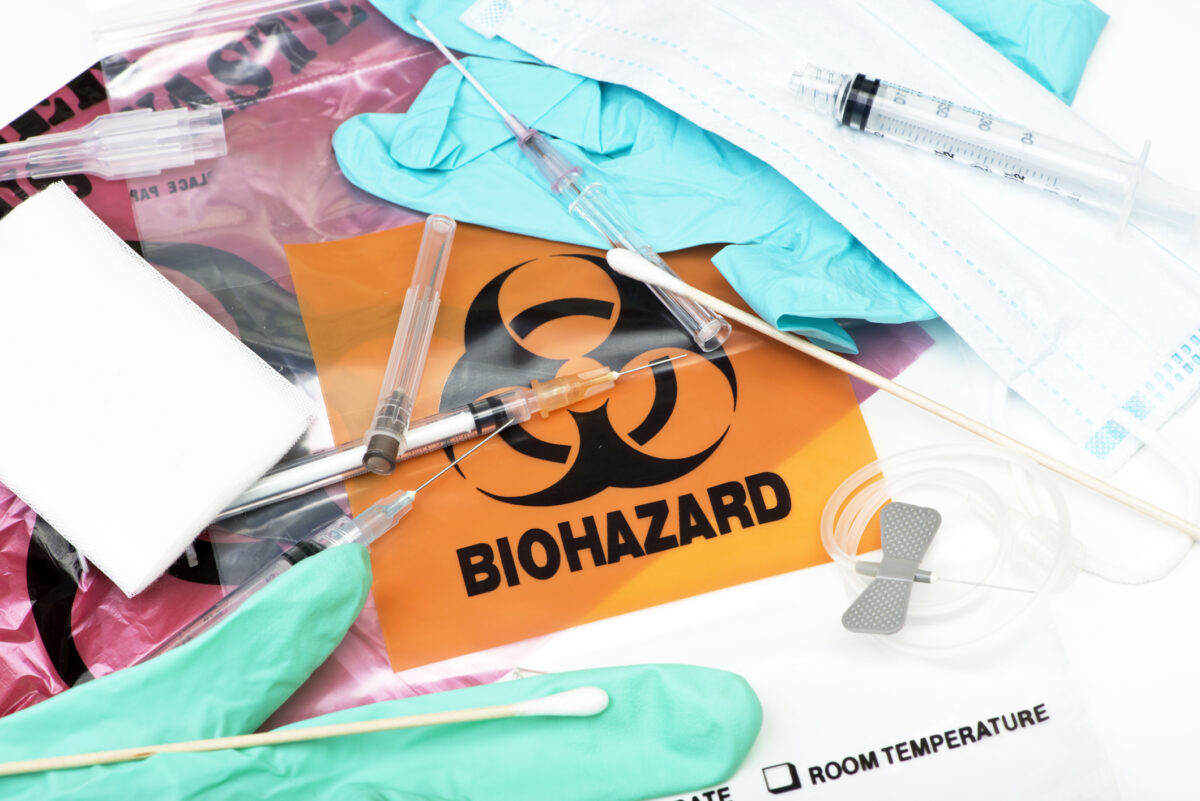
Once a diagnostic procedure is complete, patients rarely consider what is left behind. Yet hospitals in the United States generate around 7,000 tonnes of waste each day, with annual disposal costs estimated at nearly $10 billion. Medical imaging procedures, including MRI, CT and nuclear medicine scans, play an essential role in diagnosis and treatment planning, but they also create a steady flow of waste, including IV contrast vials, needles, syringes, packaging and used personal protective equipment.
What Types of Medical Waste Come Out of Diagnostic Scans?
Of all the waste healthcare activities generate, about 85% is general, non-hazardous. The remaining 15% is hazardous material that could be infectious, toxic, or radioactive. Radiology departments sit squarely in that more complicated 15%, producing byproducts such as IV contrast media, radiopharmaceuticals used in nuclear medicine, and an often-overlooked category: complex packaging.
That supply-chain packaging is a growing headache for procedural diagnostics. A 2025 study on neuro-interventional procedures quantified the material burden from supply chains before a product even reaches a patient. Picture the layers of sterile wrapping, trays, and plastic inserts around a single catheter kit, and you start to see the scale of this hidden waste. It all requires precise management to maintain environmental safety.
How Is Biohazardous Waste Segregated at the Point of Care?
The clock starts ticking the moment a procedure ends. Point-of-care segregation isn’t just about tidiness; it’s about protecting the people who handle these materials every single shift. An estimated 385,000 sharps injuries occur each year among hospital employees in the United States. That’s more than a thousand needlestick incidents per day, and many go unreported.
Rigid protocols exist to keep those numbers from climbing even higher. Improper disposal also threatens the broader community. Public health authorities have issued warnings about clinical sharps in household waste and recycling bins, which is exactly as alarming as it sounds. Staff are trained to immediately categorize and deposit materials into specific receptacles:
- Sharps containers: For needles, syringes, and broken glass. These rigid, puncture-resistant bins are the first line of defense against needlestick injuries.
- Red biohazard bags: For items saturated with blood or other potentially infectious materials.
- Trace chemotherapy and pharmaceutical bins: For non-dispensable drugs and contrast media (think leftover gadolinium contrast from an MRI).
- Radioactive shielding containers: For isotopes used in nuclear medicine, which typically require on-site decay-in-storage before they can be moved off premises.
How Do Specialized Vendors Handle What Comes Next?
Once clinic bins reach capacity, healthcare facilities rely on heavily regulated vendors to transport these materials off-site. So what happens if a facility cuts corners on its vendor choice? The consequences can be severe. Recent legislative efforts aim to impose fines up to $2 million for mismanaged infectious waste entering public trash streams.
Biogenic Solutions is one example of how a compliant partner handles medical waste disposal. Based in Texas and Oklahoma, the company uses proprietary, clinically engineered reusable bins that are locked, leak-resistant, and tamper-resistant. These containers secure contents to an irretrievable standard, helping reduce needlestick injuries while eliminating the physical risks of unstable cardboard boxes. On top of that, the service offers flat-rate pricing with no hidden fees and a digital compliance portal for straightforward tracking, making it considerably less painful for busy clinics to stay compliant with OSHA and environmental standards.
What Technologies Are Driving Sustainable Waste Management in 2026?
Once it arrives at a specialized treatment facility, waste undergoes autoclaving, shredding, or incineration. But the healthcare sector is pushing hard toward more sustainable treatment frameworks, and for good reason. A greenhouse gas study at Boston Medical Center found that 75% of hospital waste is missorted and treated as high-emission regulated medical waste. That missorting costs six times as much as proper sorting and produces 27 times the emissions of standard refuse. Not exactly a rounding error.
To tackle this, state health departments are now approving non-thermal shredding and disinfection systems. By bypassing legacy waste-treatment protocols, these advanced systems offer a substantial reduction in the greenhouse gas emissions typically generated during disposal. Facilities today are comparing treatment methods to find the right balance between environmental impact and public safety, and here’s a quick look at how the main options stack up:
Securing the Full Lifecycle of Diagnostic Byproducts
So, to recap: medical imaging facilities are juggling patient health and a significant volume of hazardous byproducts simultaneously. When you trace what happens to medical waste after a diagnostic scan, the answer reveals a tightly regulated journey, from a locked point-of-care bin all the way to a specialized treatment facility. Every step along that path, including vendor selection, container standards, and treatment method, carries real consequences for staff safety, community health, and the environment.
As the industry moves forward, greener innovations and reusable container programs are positioned to help diagnostic medicine protect both human health and the planet. If you’re running or managing a facility, it’s worth auditing your current disposal chain against these evolving standards. The regulatory landscape isn’t getting any simpler.
Disclaimer: This article is for general informational purposes only and does not constitute medical, legal, environmental, or regulatory advice. Waste handling requirements vary by jurisdiction, facility type, and material classification. Healthcare providers should follow applicable federal, state, and local regulations and consult qualified compliance or waste-management professionals where needed.
home » blog » sustainability »