
Some things just have a way of keeping you up at night.
Like that 3-year-old who came in with symptoms that (in hindsight) were textbook, but everyone missed them. The paediatrician told the parents to wait it out because it’s a virus, but by the time the child was correctly diagnosed, easy intervention was no longer an option.
Early detection saves lives, and we tell ourselves that every single day.
And it’s the truth, but why don’t we ask ourselves more often what early detection fails so frequently? Is it because of a lack of knowledge or a failure in the system? Perhaps we simply don’t ask the correct questions until it’s too late.
When it comes to which factor influences the early detection of a childhood disease, it’s pretty much a puzzle.
Early accurate identification depends on a complex interplay of factors (e.g., disease prevalence, symptom specificity, diagnostic latency, clinician suspicion thresholds, health system responsiveness, pretest probability, differential diagnosis formulation, referral pathways, etc.).
So, how do we solve it?
What Affects How Early Childhood Diseases Are Found?
Getting a child in front of a doctor should be simple, but it isn’t always.
Access to healthcare is the basis for everything else. And this is especially true when you think about factors such as continuity of care, preventive screening adherence, immunisation compliance rates, longitudinal growth monitoring (height/weight percentiles, developmental milestones, neurocognitive benchmarks, etc.).
Without regular check-ups and vaccines, a doctor’s job gets even more complicated. If you’re able to see a child on a regular basis, you get to know them in the sense that you know what’s normal for them.
Any changes, no matter how small, are much easier to spot that way (e.g., failure to thrive, regression of developmental milestones, unexplained lymphadenopathy, persistent low-grade fever, altered mental status, atypical inflammatory markers, etc.).
But not every family can make this happen because not everyone lives in a big city.
If they’re in a rural area, it could take them an hour to get to the closest paediatrician.
65+ million U.S. citizens (approx. 20%) live in designated Primary Care Professional Shortage Areas, where provider access is limited. – Health Resources & Services Administration (HRSA) Data Warehouse
That doesn’t sound so dramatic, but if you’re working two jobs, you can’t afford to lose wages just to take your child to the doctor when they’re not actually sick. Without insurance or high-deductible plans, that one doctor appointment has a high price tag.
92.1% of U.S. citizens (approx. 304 million people) had active health insurance at one point in 2022. – United States Census Bureau
And even if they lived in a city like Chicago, which is big and has plenty of hospitals and doctors’ offices, things still aren’t ideal.
Physicians often manage extremely high patient volumes, which can increase the risk of delayed or incorrect diagnoses in complex cases. When families believe a preventable error may have occurred, they sometimes seek legal guidance from a Chicago personal injury lawyer. By that stage, however, the clinical consequences may already be significant.
In a city such as Los Angeles, the issue might be different.
While LA families ‘technically’ live in a city with world-class children’s hospitals, they may end up struggling with long travel times because of factors like geographic sprawl and uneven access, or because of traffic congestion. But there could also be barriers that have to do with language or appointment availability in certain neighbourhoods.
This means that delays won’t happen because care doesn’t exist, but because reaching that care isn’t as straightforward as going from point A to point B.
Each year, approx. 1 in 20 U.S. adults (~20 million people) have had diagnostic errors happen to them in outpatient settings. – Johns Hopkins University
Then there are the things that happen at home, before the child even gets to a clinic.
Parents are the ones who notice what’s happening first, but just because you can notice something is off doesn’t mean you know what to do about it.
Some parents are able to recognise red flags.
They’ll describe the symptoms well and ask for answers. Others might notice those same signs and dismiss them.
Community education plays a big part here because families depend on clear information about what to worry about and what can be brushed off.
Examples of what to worry about:
- Cyanosis
- persistent tachypnea
- unexplained bruising
- seizure activity
- chronic abdominal distension
- abnormal neurologic reflexes
Examples of what NOT to worry about:
- transient viral upper respiratory symptoms
- low-grade fever under 100.4℉ (38℃) WITHOUT systemic signs (e.g., lethargy, persistent vomiting, altered mental status, respiratory distress, poor perfusion, hypotension, tachycardia disproportionate to fever, dehydration, non-blanching petechial, purple rash)
- self-limiting gastroenteritis
- mild reactive lymphadenopathy
- uncomplicated diaper dermatitis
- short-lived appetite fluctuations
But once a child gets to a clinic, it’s up to the medical professionals to handle things.
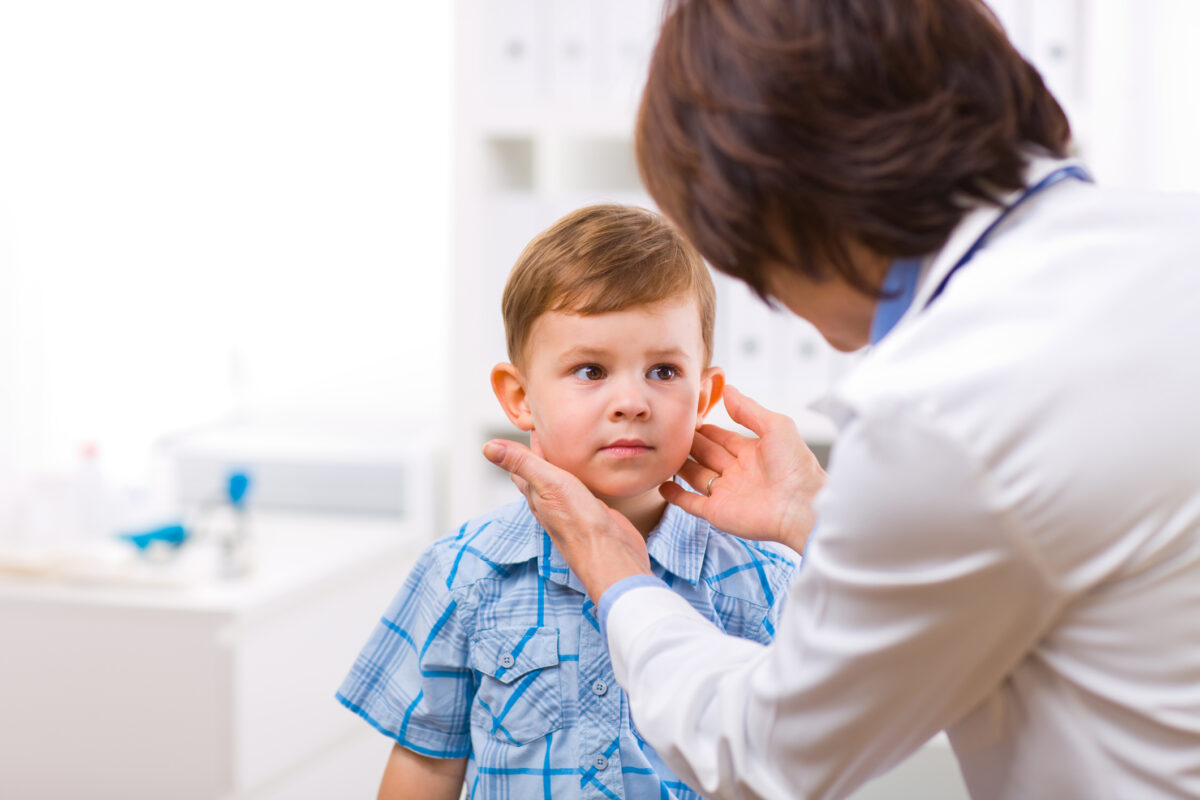
Paediatricians and primary care doctors are usually the first ones they get in touch with, and a lot of what they do is routine. That’s a good thing because it’s how you notice what’s wrong and what needs attention.
The challenge is that doctors are humans, too, and they’re mostly stretched too thin. Not to say that that’s an excuse for missing details, but it’s a reason nonetheless.
How Technology Helps Detect Childhood Diseases Sooner
For a long time, all paediatricians had to work with what they could see, hear, and feel. That got them pretty far, but realistically, there’s only so much you can catch that way. Thanks to technology (e.g., high-res imaging modalities, molecular diagnostics, biomarker profiling, next-gen sequencing (NGS), algorithm-assisted clinical decision support systems, etc.), that’s now changing.
To illustrate the point, think about medical imaging for a second.
It wasn’t that long ago that, when a doctor suspected something serious was going on, they had to refer the patient to surgery just to take a look. Now you have ultrasound, MRI, and CT scans. You can spot tumours when they’re tiny and find heart problems before they even cause symptoms.
Then there’s genetic testing, which is important beyond words because not all childhood diseases announce themselves. A baby can be a picture of health, but their DNA could hide a condition that will cause problems later.
Genetic testing can find these conditions before they ever show up, and you can start the treatment before damage occurs. That’s the power of precision medicine.
There’s a lot more to technology than fancy machines, of course.
Telemedicine, for instance, exploded during the pandemic, and that’s a great thing because it makes seeing a specialist much more accessible.
Newborn screening can’t be ignored, either.
That tiny little heel prick every baby gets before they go home screens for dozens of serious conditions like PKU and cystic fibrosis. If they’re missed, conditions like these can cause severe disability, and thanks to that test, we’re able to catch them before a single symptom appears.
Newborn screening helps identify thousands of infants in the U.S. annually, all of whom have serious but treatable conditions. This allows for early intervention before any symptoms begin. – Centers For Disease Control And Prevention
Keep in mind that none of this can replace humans.
It’s a huge help to be sure, but it’s definitely not even close to a replacement in any area. The human side to this is, in fact, more important than ever, but you have better tools to figure out what’s going on.
Conclusion
The idea of early detection is often misrepresented as this ‘magical’ moment where a genius doctor suddenly figures everything out.
But the reality of this is much different (and messier). There are A LOT of pieces that need to fit together in order to see the whole picture clearly. Detecting factors that influence the early detection of any childhood disease is a puzzle. And in order to solve the puzzle, we need a combination of access, awareness, technology, and human instinct. Even if one of these is missing, the child will have to wait to be diagnosed – which is not where we want to be.
But as you know, reality is much messier than that, and there are a lot of pieces that need to fit together in order to see the whole puzzle. Access, awareness, technology, and good old human instinct.
If even one of these factors is missing, a child waits to be diagnosed.
Disclaimer
The content published in this article is provided for general informational and educational purposes only. It does not constitute medical advice, clinical guidance, legal advice, or professional consultation of any kind. Readers should not rely on the information presented here as a substitute for advice from qualified healthcare professionals, licensed medical practitioners, or legal advisors.
Open MedScience does not provide medical diagnosis, treatment recommendations, or personalised healthcare guidance. Any clinical examples, statistics, or references to diagnostic errors, healthcare access limitations, or legal action are included solely to illustrate systemic considerations surrounding early detection of childhood disease. They are not intended to imply negligence, assign liability, or suggest specific legal remedies.
Healthcare decisions must be made in consultation with appropriately qualified professionals who can assess individual circumstances. If you believe a child may be experiencing symptoms of a serious medical condition, seek immediate medical attention from a licensed healthcare provider or emergency service.
While every effort is made to ensure the accuracy and currency of the information presented, medical knowledge, diagnostic standards, and healthcare policies evolve continuously. Open MedScience makes no representations or warranties regarding completeness, reliability, or applicability to any specific situation.
References to geographic regions, healthcare access statistics, institutions, or legal professionals are for contextual discussion only and do not constitute endorsement, recommendation, or affiliation.
By reading this article, you acknowledge that Open MedScience and its contributors shall not be held liable for any loss, injury, or damage arising from the use or misuse of the information provided.
home » blog » health matters »