
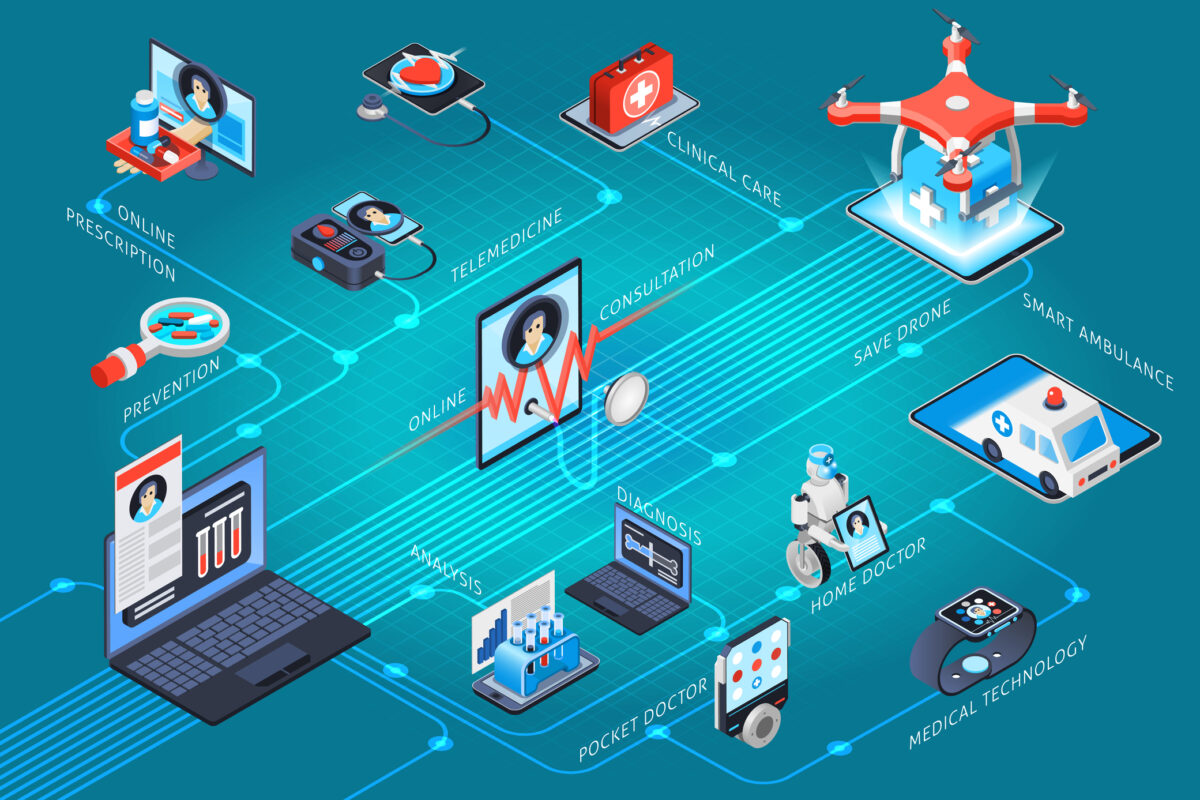
Digital health technology is changing how clinical teams work, communicate, and deliver care. As healthcare systems face ongoing staff shortages, rising patient demand, and administrative overload, the need for smarter digital solutions has become increasingly urgent. Healthcare professionals are expected to manage heavier workloads, and technology plays an important role in helping them keep pace.
Tools such as telehealth platforms, integrated patient records, remote monitoring systems, and AI-assisted documentation are now part of daily clinical workflows. These solutions reduce time spent on administrative tasks, improve access to patient information, and support faster, more confident decision-making. As a result, clinical teams can dedicate more time to direct patient care.
This article explores how digital health technology supports clinical team communication. It outlines practical adoption approaches, real-world applications that improve efficiency, and the ways these tools strengthen collaboration, care quality, and overall healthcare delivery.
Understanding Digital Health Technology in Clinical Settings
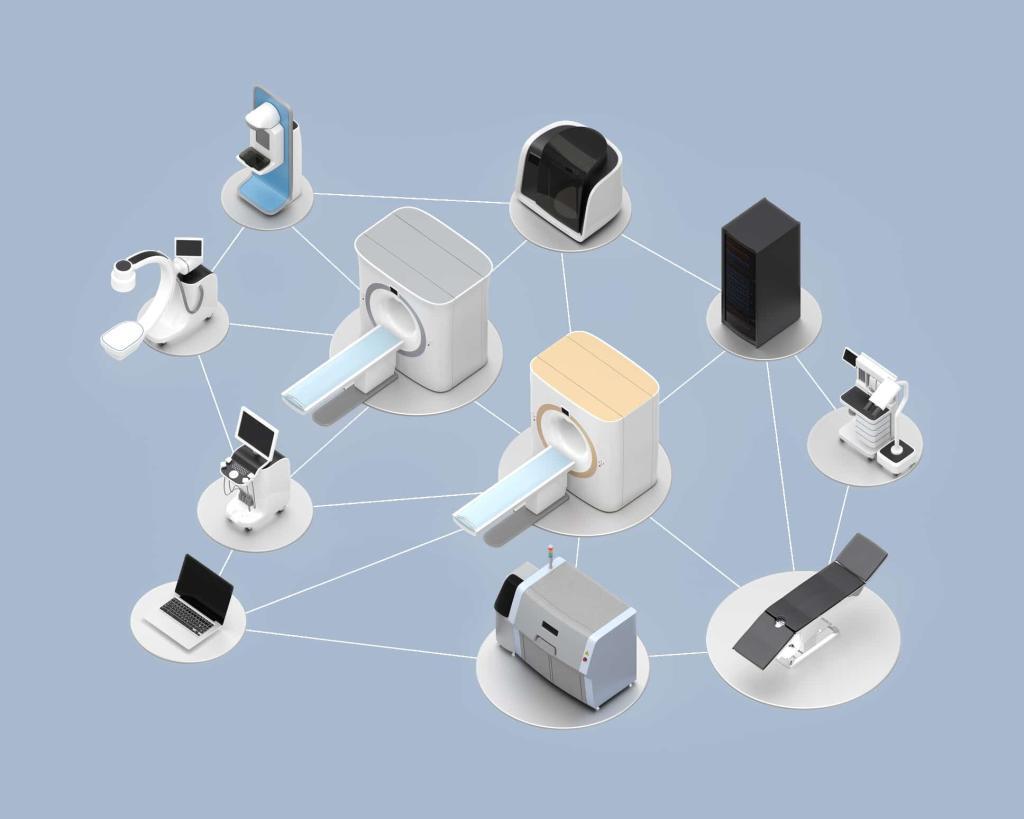
Digital health technology includes digital tools, software, and devices that boost healthcare delivery in clinical environments. This technology creates a complex network that generates, updates, and exchanges information among stakeholders throughout patient care pathways. The World Health Organization’s Global Strategy on Digital Health shows healthcare institutions how to apply these innovations while ensuring equal access to quality healthcare services.
What is digital health technology in a hospital context?
Hospital digital health technology brings together computing platforms, connectivity, software, and sensors for healthcare workflows. The term has several categories of technology that work together to create what researchers call a “digital information ecosystem”. These systems help both immediate and delayed communications among clinical team members and make health systems more efficient and sustainable.
Common digital health technology examples used by clinical staff
Clinical staff regularly use various digital tools to improve patient care:
- Electronic Health Records (EHRs) – Complete digital documentation of patient data, including diagnoses, procedures, laboratory results, and care summaries
- Secure messaging systems – HIPAA-compliant communication channels for quick information exchange
- Telemedicine platforms – Enable remote consultations that are valuable for underserved areas
- Mobile health applications – Give easy access to health information and self-monitoring tools
- Clinical communication platforms – Merge messaging, voice, and video features to connect healthcare teams
Benefits of digital health technology for communication and coordination
The Centers for Medicare & Medicaid Services note that effective clinical communication is vital for coordinated patient care. Digital health technologies provide several communication advantages. They help share information in real-time, which becomes vital during emergencies. These tools also reduce communication delays in multidisciplinary teams. Studies show improvements in clinical practice and management (9.8%). Clinical communication platforms help healthcare teams share information, coordinate care, and optimize operations while reducing miscommunication during patient handoffs.
Frameworks Guiding DHT Adoption for Team Communication
Digital health technology adoption within clinical teams requires more than selecting the right tools. Successful implementation depends on structured approaches that account for organizational readiness, workflow alignment, and external influences. To guide this process, healthcare organizations rely on established frameworks that help evaluate how new communication technologies are introduced, accepted, and sustained across clinical environments. These models provide valuable insight into the factors that shape adoption outcomes and support more consistent, effective team communication.
Technology-Organization-Environment (TOE) model in communication workflows
The TOE framework offers a complete approach to understanding DHT adoption through three key dimensions. The technological dimension looks at ease of use, perceived usefulness, and compatibility with existing systems—crucial factors for communication platforms. To name just one example, see how communication tools must combine smoothly with electronic health records to avoid workflow disruptions. The organizational dimension includes internal readiness, leadership support, and resource allocation. In fact, management support substantially influences how new communication technologies blend into clinical processes. The environmental dimension covers external influences like government regulations and competitive pressures.
Diffusion of Innovation (DOI) theory and its relevance to clinical teams
Rogers’ DOI theory shows how new ideas or technologies spread through a population. Clinical team members adopt innovations at different rates. They fall into categories from innovators (2.5%) who welcome new communication tools to laggards (16%) who resist change. Five key attributes affect adoption rates:
- Relative advantage: Perceived benefits over existing communication methods
- Compatibility: Arrangement with clinical workflows and values
- Complexity: Ease of understanding and using the technology
- Trialability: Knowing how to test communication tools before full implementation
- Observability: Visibility of positive outcomes from using DHT
How organizational readiness influences DHT communication outcomes
Staff and systems’ collective preparation—both psychological and behavioral—reflects organizational readiness for DHT adoption. Two basic constructs form the foundation: change efficacy (shared belief in capability to execute change) and change commitment (collective resolve to implement change). Communication tool implementation works well with high readiness, while low readiness creates resistance. Healthcare organizations must promote a culture that supports innovation and provides proper training to maximize DHT communication benefits.
Translating this readiness into everyday practice requires strong operational support. From a broader operational perspective, healthcare facility management plays a critical role in ensuring digital communication systems are properly integrated, maintained, and aligned with daily clinical workflows. This approach helps maintain consistency across departments while supporting reliable communication throughout daily operations.
Digital Health Technology’s Impact on Team Communication Efficiency
Healthcare professionals now depend on digital health technology to improve their communication. Many American healthcare companies, particularly those operating in highly specialized outpatient services, rely on digital communication systems to coordinate care efficiently across clinical and administrative teams.
For example, clinics offering services such as Washington DC rhinoplasty often depend on digital platforms to manage consultations, imaging reviews, pre-operative coordination, and post-procedure follow-ups without unnecessary delays.
These systems fix major problems that used to stymie good patient care.
Real-time data sharing through EHR and telehealth platforms
Digital platforms let staff share information instantly. The medical team can view patient data at the same time instead of waiting their turn. Quick access eliminates delays from paper records and disconnected digital systems. Medical teams can now make better decisions quickly, which matters most when time is critical.
Reducing communication delays in multidisciplinary teams
Patient care often involves multiple specialists who work at different times and places. Digital communication tools create central information hubs where specialists can join patient care discussions. The team doesn’t need to chase each other with phone calls or wait for meetings. They can share their thoughts and work together naturally across departments.
Improved handoff and shift-change communication using DHT tools
Digital handoff tools create standard ways to pass critical information between shifts. This reduces the chance of missing important details. The platforms come with templates that teams can customize to document patient status, concerns, and treatment plans completely. Healthcare organizations can maintain quality care whatever staff changes occur.
Case example: Teleconsultation in emergency response teams
Expert advice in emergencies can save lives. Teleconsultation systems link first responders or emergency room staff with specialists who guide them live from remote locations. This virtual support removes distance barriers and brings expert input right when critical care decisions matter most.
Performance and Workload Outcomes from Enhanced Communication
Clear and effective communication plays a major role in how clinical teams perform their daily responsibilities. When information flows smoothly between departments and care providers, tasks are completed faster, errors are reduced, and staff experience less unnecessary pressure. Digital health technology supports this process by improving how teams share updates, access patient data, and coordinate care.
Healthcare organizations that invest in well-structured digital communication systems often see noticeable improvements in staff efficiency. By reducing fragmented messaging and limiting delays in information exchange, digital tools help teams stay aligned throughout the day. This leads to stronger collaboration, fewer interruptions, and more consistent clinical workflows.
Correlation between communication quality and reduced workload
Good communication channels help employees receive and respond to information better. This helps build team spirit and organizational identity. Poor communication causes about two-thirds of sentinel incidents in healthcare. Healthcare institutions see notable drops in workload when they use digital tools. These tools automate tasks and give quick access to live patient data. Healthcare professionals say well-integrated digital systems cut down on paperwork so they can focus more on patient care.
How DHT reduces redundant communication loops
Digital platforms cut down on repeated communication patterns through:
- Unified platforms that combine multiple tools (hospitals with single communication systems saw 70% improvement in on-time operating room starts)
- Automated administrative tasks like scheduling, confirmations, and record checks
- Direct communication between transferring and receiving nurses without middlemen
The largest longitudinal study shows that working with multiple health systems often adds to digital workload. All the same, integrated platforms stop duplicate paperwork, repeated data entry, and unnecessary follow-up calls.
Mediating role of staff performance in communication-driven outcomes
Staff performance plays a central role in how communication improvements translate into lower workload. When healthcare professionals receive clear, timely information through reliable digital systems, they can complete tasks more confidently and with fewer interruptions. This clarity reduces uncertainty, minimizes repeated questions, and helps teams prioritize care more effectively.
Well-designed digital communication tools also support staff by creating more predictable workflows. When expectations are clear and information is easy to access, clinicians experience less mental strain during busy shifts. However, successful adoption depends on proper training and organizational support. Without these elements, even advanced systems can add stress rather than reduce it. When implemented thoughtfully, digital health technology strengthens communication, supports staff performance, and contributes to a more sustainable working environment.
Conclusion
Digital health technology continues to play a meaningful role in helping healthcare organizations manage complex workforce demands. When communication systems are clear, accessible, and reliable, clinical teams can work with greater confidence and consistency. Strong coordination supports safer care environments and helps staff navigate daily responsibilities without unnecessary friction.
As healthcare delivery becomes more interconnected, the value of thoughtful technology use becomes even more apparent. Tools that support communication do more than improve efficiency. They influence how teams collaborate, how quickly issues are addressed, and how supported professionals feel throughout their shifts. When digital systems align with real clinical workflows, they contribute to stability rather than disruption.
Looking ahead, the success of digital health technology will depend less on adoption alone and more on how well these tools serve the people using them. Organizations that prioritize training, usability, and ongoing evaluation are better positioned to strengthen teamwork and sustain workforce performance over time. With the right approach, digital communication systems can support both quality care delivery and a healthier working experience for clinical staff.
Disclaimer
The content of this article is provided for general informational and educational purposes only. It is not intended to replace professional medical, clinical, legal, or organisational advice. While reasonable efforts have been made to ensure accuracy at the time of publication, Open MedScience makes no guarantees regarding the completeness, reliability, or suitability of the information presented.
Readers should not rely solely on this material when making decisions related to healthcare operations, workforce management, digital system implementation, or patient care. Always seek guidance from qualified healthcare professionals, IT specialists, or relevant regulatory authorities before adopting or modifying digital health technologies in clinical environments.
Any references to specific tools, platforms, services, or examples are included for illustrative purposes and do not represent endorsements or recommendations. Open MedScience accepts no responsibility for any loss, damage, or adverse outcomes arising from the use of information contained within this article.
By accessing and reading this content, you agree that responsibility for any actions taken based on the information remains solely with the reader.
home » blog » medical technologies »