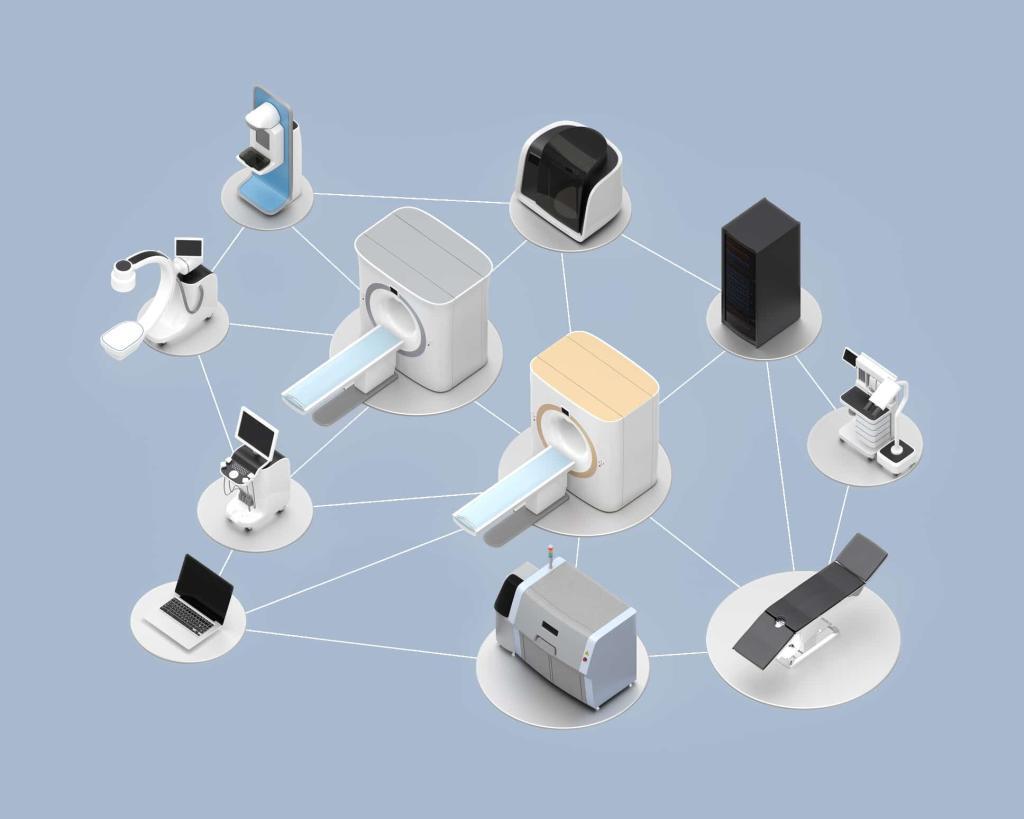


Ask a MedTech founder five years ago what stood between their device and FDA clearance, and cybersecurity rarely made the top three concerns — usually well behind clinical data, biocompatibility, and software verification. Ask the same question today, and cybersecurity has become an increasingly important consideration in FDA premarket submissions for connected medical devices. Understanding how that landscape is structured, and how the pieces connect, is now a prerequisite for any team bringing a connected device to market.
The Legal Foundation: Section 524B
The starting point is Section 524B of the Federal Food, Drug, and Cosmetic Act, signed into law in December 2022 with FDA enforcement authority active since October 1, 2023. It applies to any “cyber device” — one that includes sponsor-authorized software, can connect to the internet, and has characteristics that could be vulnerable to cybersecurity threats. That three-part test is intentionally broad, and it captures the vast majority of modern connected devices, from wearable sensors to surgical robotics platforms.
Once a device meets that test, 524B requires manufacturers to submit a plan for identifying and addressing postmarket vulnerabilities, processes providing reasonable assurance the device is cybersecure (including a mechanism for timely patching), and a software bill of materials. These aren’t recommendations — the FDA can refuse to accept a submission outright if they’re missing.
The Guidance Layer: How to Actually Comply
Section 524B tells manufacturers what they must do; it doesn’t spell out exactly how to prove it. That’s the role of the FDA’s premarket cybersecurity guidance, most recently finalized on February 3, 2026, replacing earlier versions from 2014, 2023, and mid-2025. This guidance document — nonbinding, but treated by reviewers as the operational standard — describes the Secure Product Development Framework (SPDF) manufacturers are expected to integrate into their quality management system, and lays out the underlying deliverables a submission needs: a security risk management file aligned to the AAMI SW96 consensus standard, a STRIDE-style threat model, a machine-readable SBOM with vulnerability exploitability documentation, defined security controls covering authentication and cryptography, an independent penetration test report, and a postmarket monitoring and disclosure plan.
Submissions are filed through the FDA’s eSTAR electronic template, which as of version 7.0 organizes this material into eight distinct cybersecurity attachment slots. A submission missing content in any of those slots frequently draws a hold within the agency’s 15-day acceptance review window — before a clinical reviewer even examines the device’s safety and effectiveness data.
Where Manufacturers Commonly Get Tripped Up
A few patterns recur across the deficiency letters manufacturers receive. Threat models are submitted without clear traceability back to specific design controls or verification evidence — reviewers want to see the chain from identified threat to implemented control to test result, not just a conclusion. SBOMs are submitted as bare component lists without the accompanying VEX analysis reviewers now expect for flagged vulnerabilities. Penetration testing is scoped too narrowly, often limited to web APIs or mobile apps while skipping the firmware, wireless, and hardware interfaces the device actually exposes. And postmarket plans are written as a paragraph of good intentions rather than an operable process with named owners and response timelines.
Perhaps the most costly misconception is treating cybersecurity as something to “add later,” after the core engineering is done. Reviewers can often tell when a security risk file was assembled retroactively — dates in the documentation don’t align with the design history file, and threat model assumptions contradict what was actually built. That mismatch tends to trigger a request to redo portions of design controls, adding months to a timeline that a proactive approach could have avoided entirely.
The Cost of Getting It Wrong
The financial stakes are real. An FDA cybersecurity deficiency letter starts a response clock — typically 180 days — and missing it can mean a submission is withdrawn and has to restart. For a device generating meaningful revenue, even a modest delay translates into millions of dollars in lost sales, on top of remediation costs. Postmarket, the exposure is arguably worse: an uncontrolled vulnerability discovered after a device ships can trigger a CISA advisory, an FDA safety communication, and in serious cases, a recall — consequences that extend well beyond the direct cost of fixing the underlying flaw.
Timing the Work Correctly Matters as Much as Doing It
One pattern that separates smooth submissions from painful ones is when cybersecurity work actually starts relative to the rest of device development. Teams that begin threat modeling and architecture review while the design is still flexible tend to find and fix issues cheaply — a trust boundary that needs rethinking, or an authentication scheme that needs strengthening, is a design conversation at that stage, not a rework project. Teams that wait until shortly before filing to start the cybersecurity workstream tend to discover the same issues at a point where fixing them means revisiting a design that’s already locked, which is a categorically more expensive and slower process.
A reasonable rule of thumb many manufacturers now use is to begin dedicated premarket cybersecurity work, including a first pass at penetration testing, roughly nine months ahead of an anticipated submission date. That window allows enough time to surface findings, remediate them, and complete a re-test cycle before the documentation package needs to be finalized — without the schedule pressure that leads teams to accept unresolved findings or thin documentation just to hit a filing date.
Building (or Buying) the Right Expertise
Because this discipline sits at the intersection of embedded engineering, regulatory affairs, and offensive security, most MedTech teams don’t have it fully in-house, particularly at the startup and mid-size manufacturer stage. That’s driven the growth of firms specializing specifically in medical device cybersecurity for FDA submissions — building threat models, SBOMs, and penetration test evidence formatted the way reviewers are trained to evaluate it, rather than adapting generic IT security deliverables after the fact.
Whether a manufacturer builds this capability internally or partners with a specialist, the underlying principle is the same: cybersecurity is no longer a parallel compliance track that runs alongside device development. Under the current guidance, it’s integrated directly into the design controls, verification testing, and quality system that determine whether a submission clears review on the first pass — and increasingly, whether the device is safe for the patients who will eventually depend on it.
Disclaimer: This article is provided for general informational and educational purposes only and does not constitute legal, regulatory, cybersecurity, engineering or professional advice. FDA requirements, guidance documents, submission processes and cybersecurity expectations may change over time and may vary according to the device, its intended use and specific regulatory circumstances. Manufacturers and other stakeholders should consult current FDA guidance, applicable legislation and recognised standards, and seek advice from suitably qualified regulatory and cybersecurity professionals where appropriate. References to third-party organisations, services or websites are provided for informational purposes only and do not constitute endorsement or a guarantee of regulatory compliance, FDA clearance or approval. Open MedScience accepts no responsibility for decisions or actions taken solely on the basis of the information presented in this article.
home » blog » medical technologies »