
Introduction
Medical imaging has always relied heavily on the trained eye of radiologists and vascular specialists, but that landscape is shifting rapidly as artificial intelligence becomes woven into diagnostic workflows. Vascular diagnostics, in particular, stands at an interesting crossroads, where the subtle, often ambiguous patterns of blood flow, vessel structure, and circulatory dysfunction are increasingly being analysed with the help of machine learning algorithms. This shift promises faster, more consistent diagnoses, but it also introduces a new set of challenges that clinicians, technologists, and patients alike need to understand. Exploring both sides of this transformation offers a clearer picture of where vascular medicine is headed.
Understanding the Complexity of Vascular Diagnostics
Vascular conditions, ranging from deep vein thrombosis to varicose veins and peripheral artery disease, can be notoriously difficult to diagnose with complete confidence using traditional methods alone. Ultrasound imaging, the most common tool used in vascular assessment, requires significant skill to interpret accurately, since blood flow patterns and vessel structures can vary considerably between individuals. Subtle abnormalities, such as early-stage valve dysfunction or minor blockages, can be easy to overlook, even for experienced clinicians. This inherent complexity is part of why vascular diagnostics has become one of the more promising areas for artificial intelligence integration, as machine learning models are particularly well suited to identifying patterns that might be too subtle or inconsistent for the human eye to catch reliably every time. Individuals experiencing persistent symptoms such as visible veins, leg heaviness, or swelling may also benefit from seeking relief for visible veins and leg heaviness in Weston, where comprehensive vascular evaluations can help identify underlying circulatory conditions.
How Artificial Intelligence Is Being Applied to Vascular Imaging
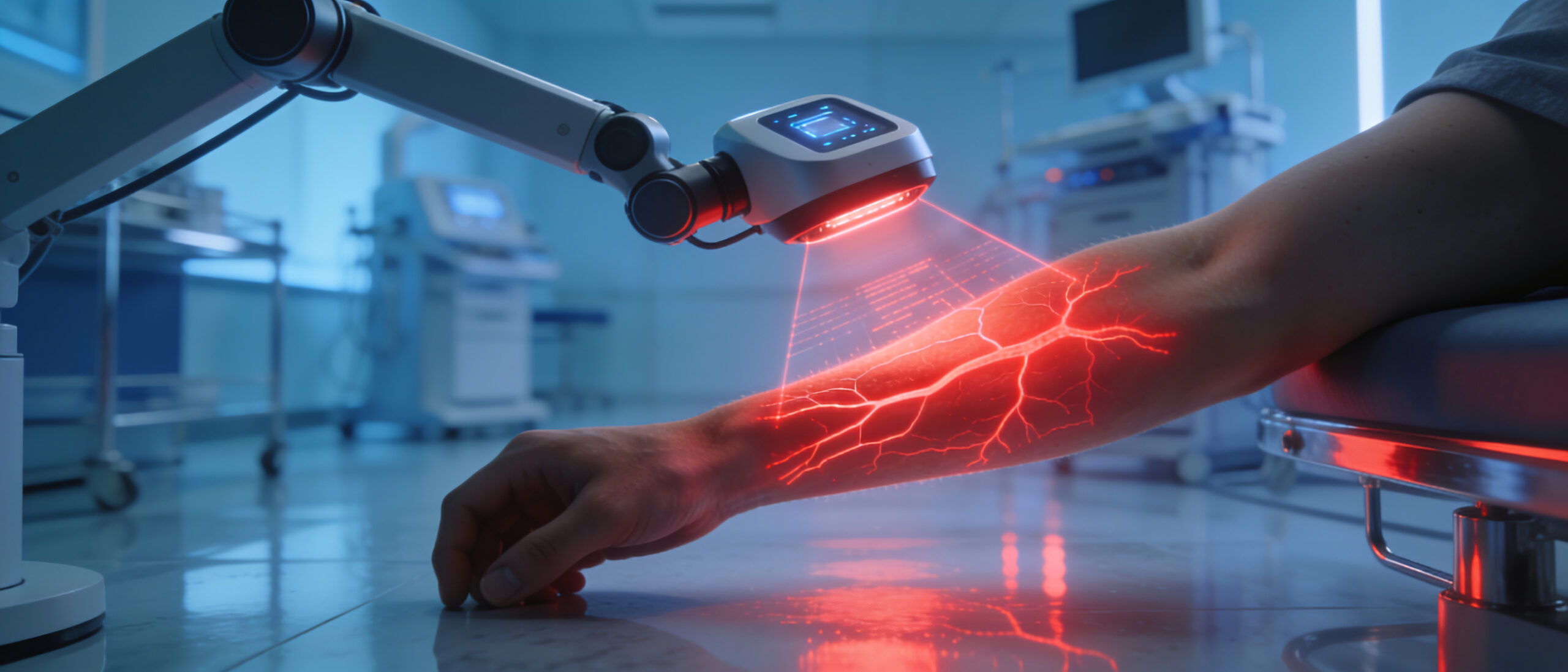
Artificial intelligence is being incorporated into vascular diagnostics primarily through image analysis and pattern recognition. Deep learning models, trained on large datasets of ultrasound images, angiograms, and other vascular scans, can learn to identify abnormalities such as clot formation, vessel narrowing, or irregular blood flow with a level of consistency that does not fluctuate based on fatigue or experience level, factors that can affect even the most skilled human clinicians. These systems are increasingly being used to flag areas of concern for further review, essentially acting as a second set of eyes that supports rather than replaces the radiologist or vascular specialist. Some AI-driven tools can even quantify blood flow velocity or vessel diameter changes over time with a precision that would be difficult to achieve through manual measurement alone, offering clinicians more granular data to inform treatment decisions.
The Promise of Earlier and More Accurate Detection
One of the most significant opportunities artificial intelligence brings to vascular diagnostics is the potential for earlier detection of circulatory issues. Conditions like chronic venous insufficiency or early-stage peripheral artery disease often develop gradually, with symptoms that can be easy to dismiss or misattribute to general fatigue or ageing. AI-assisted diagnostic tools have shown promise in identifying subtle changes in vascular structure or blood flow patterns before they progress into more advanced, symptomatic stages. This kind of earlier detection matters considerably, since many vascular conditions are far easier to manage or treat when caught early, compared to waiting until symptoms become severe enough to be obvious without specialised imaging. By reducing the diagnostic delay that often accompanies subtle vascular changes, AI has the potential to shift vascular care toward a more proactive, preventive model rather than a reactive one.
Improving Consistency Across Diagnostic Settings
Beyond earlier detection, artificial intelligence also offers the potential to reduce variability in how vascular conditions are diagnosed across different clinicians, facilities, and geographic regions. Diagnostic accuracy in vascular medicine has historically depended significantly on the experience and training of the individual interpreting the imaging, which can lead to inconsistencies, particularly in smaller clinics or regions with limited access to specialised vascular expertise. AI-driven diagnostic support tools can help standardise interpretation by applying consistent analytical criteria across every scan, regardless of where or by whom it is being reviewed. This has particularly meaningful implications for patients in underserved areas, where access to highly specialised vascular radiologists may be limited, but AI-assisted tools could help bridge that gap by supporting general practitioners or less specialised imaging technicians in identifying concerning patterns that warrant further evaluation.
The Challenge of Data Quality and Algorithmic Bias
Despite these promising applications, artificial intelligence in vascular diagnostics is not without significant challenges. The accuracy of any machine learning model depends heavily on the quality and diversity of the data used to train it. If training datasets lack sufficient representation across different age groups, ethnicities, body types, or underlying health conditions, the resulting algorithms may perform inconsistently or inaccurately for underrepresented populations. This is a particularly pressing concern in vascular medicine, where anatomical variation and differing risk factors across populations can significantly influence how conditions present on imaging. Addressing this challenge requires ongoing effort to build more diverse, representative training datasets, along with rigorous validation testing across varied patient populations before these tools are deployed widely in clinical practice.
Balancing Automation with Clinical Judgment
Another significant challenge lies in determining the appropriate balance between AI-driven analysis and human clinical judgment. While artificial intelligence can process and analyse imaging data with remarkable speed and consistency, vascular diagnosis often requires contextual understanding that extends beyond what appears on a scan. Factors such as a patient’s full medical history, physical symptoms, lifestyle, and even how symptoms have progressed over time all play a role in accurate diagnosis and treatment planning. There is a legitimate concern within the medical community that over-reliance on AI tools could lead to a narrowing of clinical reasoning, where practitioners defer too heavily to algorithmic output rather than integrating it thoughtfully alongside their own expertise. The most effective implementations of AI in vascular diagnostics tend to position these tools as decision-support systems rather than autonomous diagnostic authorities, preserving the essential role of clinical judgment in the overall process.
Regulatory and Ethical Considerations
As artificial intelligence becomes more embedded in vascular diagnostics, regulatory frameworks are still working to catch up with the pace of technological development. Questions around liability, particularly in cases where an AI system contributes to a missed or delayed diagnosis, remain complex and largely unresolved in many jurisdictions. Additionally, transparency in how these algorithms reach their conclusions, often referred to as the interpretability challenge, is an ongoing area of concern, since many deep learning models function as something of a black box, making it difficult for clinicians to fully understand why a particular result was flagged. Ethical considerations also extend to patient data privacy, given that training and refining these AI systems typically requires access to large volumes of sensitive medical imaging data, which must be handled with rigorous security and consent protocols.
What This Means for Patient Care Today
While artificial intelligence continues to develop within vascular diagnostics, patients experiencing symptoms of circulatory issues should not wait for these technologies to become universally available before seeking evaluation. Visible veins, persistent leg heaviness, swelling, or aching, particularly after standing or sitting for extended periods, remain important signals worth addressing through established diagnostic and treatment pathways. The integration of artificial intelligence into vascular medicine is best understood as an enhancement to existing care pathways rather than a replacement for timely, attentive clinical evaluation.
Looking Ahead
The integration of artificial intelligence into vascular diagnostics represents a genuinely significant shift in how circulatory conditions are identified and managed, offering real opportunities for earlier detection, greater diagnostic consistency, and expanded access to specialised-level analysis. At the same time, the challenges surrounding data quality, algorithmic bias, clinical integration, and regulatory oversight are substantial and will require continued attention as these technologies mature. Rather than viewing AI as either a revolutionary cure-all or an unreliable novelty, the most productive perspective recognises it as a powerful tool that, when thoughtfully integrated alongside clinical expertise, has the potential to meaningfully improve vascular care for patients across a wide range of settings and circumstances.
Disclaimer: This article is provided for general informational and educational purposes only and should not be regarded as medical advice, diagnosis, or treatment. It discusses current and emerging applications of artificial intelligence in vascular diagnostics but does not recommend or endorse any specific technology, product, healthcare provider, or clinical approach. AI-assisted diagnostic tools are intended to support, not replace, the judgement of qualified healthcare professionals. If you have symptoms such as leg pain, swelling, visible veins, numbness, or other signs of a vascular condition, seek prompt assessment from an appropriately qualified healthcare professional. Clinical decisions should always be based on an individual’s medical history, examination, diagnostic findings, and current evidence-based guidelines.
home » blog » artificial intelligence »