
Iodine-123 Ioflupane (DaTscan): Diagnosis of Parkinson’s Disease and Movement Disorders
 By
By
Iodine-123 Ioflupane known as DaTscan aids in diagnosing Parkinson’s disease by visualising dopamine transporters using SPECT imaging.
Radiopharmaceuticals can be divided into radioactive molecules or radionuclides that facilitate diagnostic imaging and radiotherapy. Before being used in the clinical setting, all commercially produced radiopharmaceuticals must be approved by the US Food and Drug Administration (FDA).
Also, radiopharmaceuticals must possess various characteristics to be desirable for nuclear medicine applications. Radionuclide decay should be able to produce gamma emissions of suitable energy for diagnostic imaging. The ideal energy for a gamma camera is 100-200 keV, compared to 511 keV for positron emission tomography imaging.
Radiopharmaceuticals should not contain particle radiation, such as beta emissions, which can contribute to the patient’s radiation doses, even though beta emissions have therapeutic properties.
Furthermore, radionuclides should have an effective half-life for clinical applications. They should also be carrier-free and not contaminated with a stable radionuclide. If the specific activity changes, this can harm biodistribution and labelling efficiency.
Considering all the above, one of the best radionuclides for radiopharmaceuticals is technetium-99m, especially for gamma camera imaging. The radiopharmaceutical should rapidly localise in a specific part of the body according to the intended application. Background clearance should also be rapid to achieve reasonable target-to-background ratios.
Radiotherapy treatments involving the radionuclide attached to a vector (antibody) to deliver radioactivity to specific cells are called radioimmunotherapy.
For example, the radiopharmaceutical iodine-131 tositumomab, yttrium-90 ibritumomab and yttrium-90 epratuzumab are used to treat non-Hodgkin’s lymphoma.
Also, samarium-153 (Quadramet) is effective in relieving the pain of bone cancer and prostate and breast cancer. The most used radioisotope for treating bone metastasis in the US is samarium-153 EDTMP (lexidronam).
The pure beta emitter yttrium-90 is used to relieve the pain of arthritis in larger synovial joints. Other radiopharmaceuticals include Iofetamine (I-123 iodoamphetamine), used for non-invasive evaluation of local cerebral blood flow in cerebrovascular accidents, and dysprosium, used as an aggregated hydroxide for synovectomy (removal of synovial tissue surrounding a joint ) treatment of arthritis.
By
Iodine-123 Ioflupane known as DaTscan aids in diagnosing Parkinson’s disease by visualising dopamine transporters using SPECT imaging.
By
Iodine-123 iobenguane is vital for detecting, staging, and monitoring neuroendocrine tumours, guiding treatment, and offering prognostic insights.
By
Indium-111 Pentetate enables tumour detection, infection, inflammation tracking, and cerebrospinal fluid leak identification.
By
Indium-111 oxyquinoline enables diverse cellular imaging, crucial for detecting infections, thrombosis, tumours, and advancing stem cell research.
By
Indium-111 chloride effectively aids infection and inflammation imaging by labelling WBCs, enabling precise issue localisation and severity assessment.
By
Gallium-68 Gozetotide enhances PET imaging for oncology, targeting somatostatin receptors, and offering improved tumour detection and patient care.
By
Gallium-68 DOTATOC revolutionises neuroendocrine tumor diagnosis, enhancing PET imaging accuracy, sensitivity, and management in the medical field.
 By
By
Alzheimer’s disease, an age-related neurodegenerative disorder, impacts brain structure and function, requiring advanced imaging techniques for improved understanding and diagnosis.
By
Gallium-68 DOTATATE, a radiopharmaceutical, targets somatostatin receptors, aiding neuroendocrine tumor detection through PET imaging, enhancing diagnostic accuracy and patient outcomes.
By
Gallium-67 citrate is a radiopharmaceutical used for imaging infections, inflammation, cancer, and fever of unknown origin.
By
Fluorine-18 Flutemetamol, a radioactive tracer, for early detection of Alzheimer’s disease through PET imaging, enhancing diagnostic accuracy.
By
Fluorine-18 Fludeoxyglucose, a radiotracer used in PET scans, enables precise cancer diagnosis, evaluating metabolic activity, and monitoring treatment efficacy non-invasively.
By
Fluorine-18 Flucicovine (Axumin) improves prostate cancer detection, enabling accurate diagnosis and targeted treatments with PET imaging.
By
Fluorine-18 Florbetapir, radiotracer, amyloid plaques, Alzheimer’s disease, PET imaging, early diagnosis, pharmaceutical research, neurodegenerative disorders, brain.
By
Fluorine-18 Florbetaben is a radiotracer used in medical imaging to detect amyloid plaques in the brain.
By
Copper-64 DOTATE, a diagnostic radiopharmaceutical, effectively targets neuroendocrine tumours, enabling precise imaging and personalised treatment plans for cancer patients.
By
Carbon-14 urea, utilised in breath tests, effectively detects Helicobacter pylori infections, aiding gastric ulcer diagnosis and management.
By
Carbon-14 Choline, a radioactive isotope, improves medical imaging accuracy and expands molecular research, aiding cancer diagnosis and treatment.
 By
By
SPECT imaging provides valuable functional information, aiding clinicians in diagnosing, planning treatments, and monitoring progress.
 By
By
Theranostics is a cutting-edge approach that integrates diagnosis and therapy, enabling personalised and precise disease management.
 By
By
Author services provide essential support, ensuring manuscripts meet journal standards, enhancing publication quality, and facilitating peer review.
 By
By
Imaging agents can be used to evaluate organ function, detect cancer, measure blood flow and follow metabolic processes.
 By
By
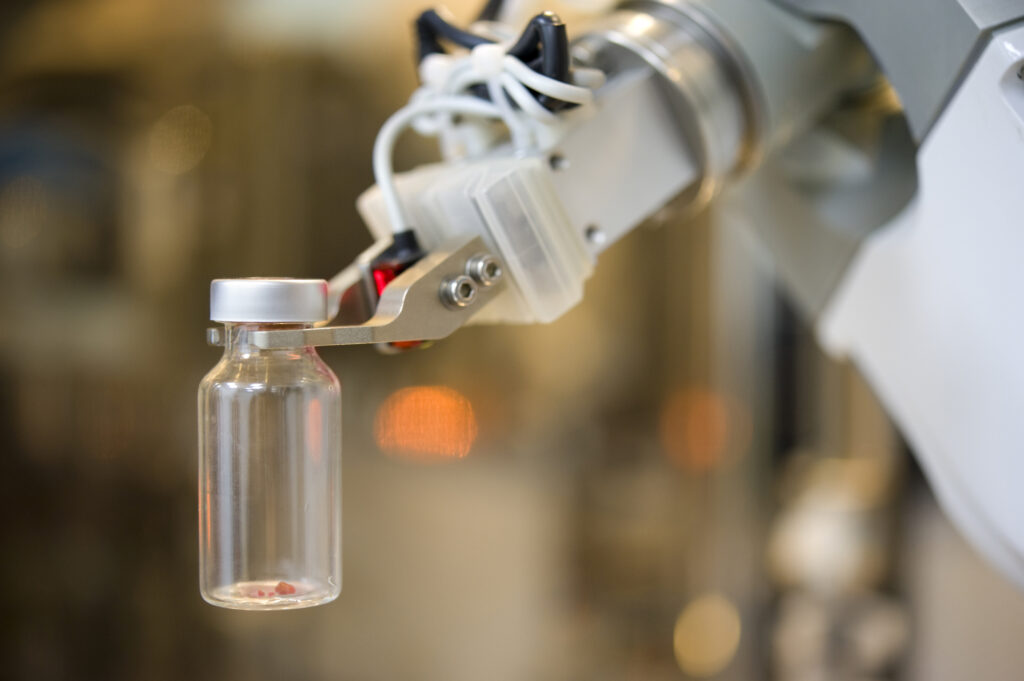
Radiopharmaceuticals are used in nuclear medicine for the application of medical imaging and therapy.
 By
By
Radiopharmaceuticals enhance PET and SPECT imaging, enabling precise visualisation of physiological processes.
By
Application of aptamers in drug delivery systems and radiopharmacy.
By
A method uses polylactic acid as the polymer to encapsulate nano-hydroxyapatite.
Automated radiosynthesis of fluorine-18 choline using a modified TracerLab module.